judy
judy Anxiety in Arabic is expressed through the word “قلق” (qalaq), which captures feelings of unease, worry, and apprehension. For Arabic-speaking communities in Canada navigating mental health challenges, understanding this terminology is the first step toward finding culturally relevant support and breaking through language barriers that often make accessing care more difficult.
Speaking about mental health in your first language matters deeply. When you can name what you’re experiencing using words that feel natural and precise, you’re better equipped to support yourself and communicate your needs to healthcare providers. The phrase “اضطراب القلق العام” (general anxiety disorder) describes persistent, overwhelming worry that interferes with daily life, a condition that affects people across all cultures and languages.
Finding mental health resources in Arabic has become more accessible in 2026, though gaps remain. Organizations like The Royal College of Psychiatrists now provide Arabic translations of essential information about anxiety and generalized anxiety disorder, including specific resources for children and young people. These materials acknowledge both the clinical aspects of anxiety and the cultural contexts that shape how Arabic-speaking communities understand and address emotional wellbeing.
Language shouldn’t stand between you and the care you deserve. Whether you’re seeking help for yourself or supporting a loved one, knowing the right words in Arabic creates a foundation for conversations about mental health that feel authentic, respectful, and rooted in your cultural experience. This guide will help you navigate terminology, locate Arabic-language resources, and take practical steps toward healing.
The Language Gap in Mental Health Care
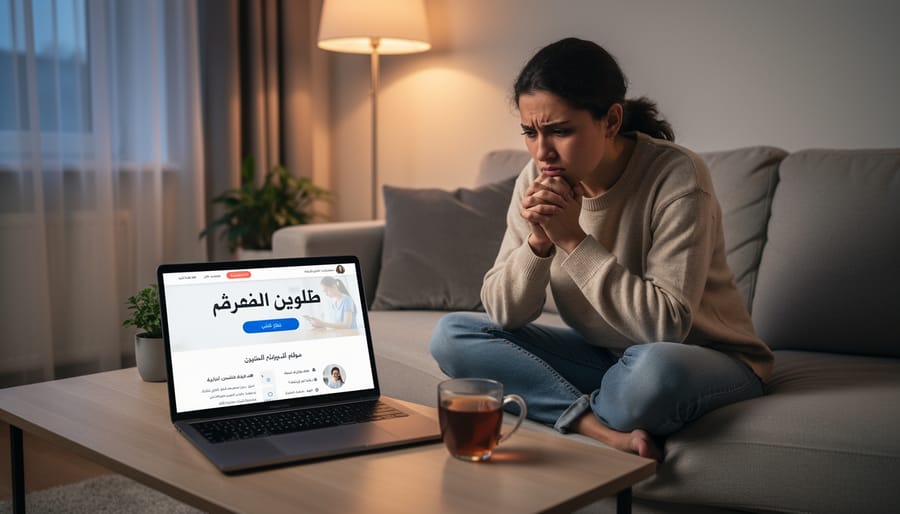
When anxiety strikes, finding the right words to describe what you’re feeling isn’t just about vocabulary, it’s about being understood. For Arabic-speaking Canadians, this challenge goes deeper than a simple translation exercise. The language gap in mental health care creates a real barrier that can determine whether someone reaches out for help or continues to struggle alone.
Mental health symptoms don’t translate neatly across cultures. The physical sensation of a racing heart, the intrusive thoughts that won’t quiet, the overwhelming dread that something terrible will happen, these experiences get filtered through language, culture, and community understanding. When healthcare providers and patients don’t share a language, crucial details get lost. A clinician might miss the cultural context behind how someone describes their distress, or a patient might downplay symptoms they can’t quite articulate in their second language.
Canada’s Arabic-speaking population has grown substantially, with communities established across major cities from Montreal to Toronto to Calgary. Many are first-generation immigrants or refugees who arrived as adults, with Arabic remaining their primary language for expressing emotions and complex experiences. Even those fluent in English often find that discussing mental health in a second language feels clinical, detached, or inadequate for conveying the full weight of their experience.
The stakes are high. Research consistently shows that language concordance, when patients and providers speak the same language, leads to better health outcomes, more accurate diagnoses, and higher treatment satisfaction. For anxiety specifically, where symptoms can be subtle and deeply personal, being able to describe exactly how you feel matters enormously.
Without resources in Arabic, many people delay seeking help, hoping symptoms will resolve on their own. Others may turn to community members who lack professional training, or rely on incomplete information from social media. The absence of accessible, culturally appropriate resources in one’s first language doesn’t just create inconvenience, it perpetuates suffering that could be addressed with proper support.
Understanding Anxiety: The Arabic Perspective

In Arabic-speaking communities, the word قلق (qalaq) serves as the foundation for understanding anxiety. The term carries weight beyond simple nervousness, it encompasses both mental unease and physical restlessness, capturing the full-body experience that anxiety sufferers know too well. When someone says they feel قلق, they’re describing an emotional state where the mind cannot settle and the body refuses to be still.
The power of qalaq lies in how it bridges the gap between internal feelings and external symptoms. Unlike some mental health terms that sound clinical or detached, qalaq feels immediate and personal. It’s a word people have used for generations to describe worry, apprehension, and that persistent sense that something isn’t right. This familiarity makes it easier for Arabic speakers to recognize their own experience and understand they’re not alone.
- قلق (qalaq)
- The core term for anxiety, capturing both mental unease and physical restlessness. It translates as anxiety, anxiousness, or apprehension, and can also function as a verb meaning “to be uneasy or anxious.”
- اضطراب القلق العام (idtirab al-qalaq al-‘aam)
- General anxiety disorder or generalized anxiety disorder, the clinical term for persistent, excessive worry about everyday matters. This phrase appears in medical resources and helps people recognize when their qalaq has crossed into a treatable condition.
- قلق النفسي (qalaq al-nafsi)
- Psychological anxiety, emphasizing the mental health aspect of the condition. This term helps distinguish anxiety as a mental health concern rather than situational nervousness.
When seeking professional help, knowing the clinical terminology matters tremendously. The phrase اضطراب القلق العام (idtirab al-qalaq al-‘aam) specifically refers to general anxiety disorder, the kind of persistent worry that interferes with daily life rather than occasional nervousness about specific events. Being able to name this condition in Arabic allows people to search for appropriate resources, communicate accurately with healthcare providers, and understand diagnosis information in their first language.
The Royal College of Psychiatrists recognizes this need, which is why they’ve translated materials on anxiety and generalized anxiety disorder into Arabic, along with resources specifically addressing anxiety in children and young people. These translations don’t just swap English words for Arabic equivalents, they preserve the nuanced understanding of how anxiety manifests across different age groups and contexts within Arabic-speaking communities.
Understanding these terms empowers Arabic speakers to advocate for themselves in healthcare settings and helps family members recognize when a loved one needs support. The language we use shapes how we understand our experiences, and having precise Arabic terminology for anxiety validates those experiences as real, treatable conditions worthy of care.
Available Resources for Arabic-Speaking Canadians
Finding help for anxiety in Arabic has become increasingly possible in Canada, though knowing where to look makes all the difference. While the mental health system still has gaps, several reliable resources now exist specifically for Arabic speakers.
The Royal College of Psychiatrists provides professionally translated materials that are freely accessible online. Their Arabic-language guide on anxiety and generalized anxiety disorder explains what anxiety is, how it affects the body and mind, and when professional help becomes necessary. The language is clear and respectful, avoiding medical jargon while remaining accurate. Equally valuable is their resource on anxiety in children and young people, which helps parents recognize signs of distress in anxious youth and understand age-appropriate responses. These guides can be downloaded as PDFs or read directly on screen, making them accessible whether you prefer printed materials or digital formats.
Beyond written resources, community organizations across Canadian cities increasingly offer mental health support in Arabic. Settlement agencies in Toronto, Montreal, and Ottawa often connect newcomers with Arabic-speaking counselors or cultural liaisons who understand both the language and the cultural context of anxiety. Many of these services are free or operate on sliding-scale fees based on income.
Telehealth options have expanded access considerably. Several Canadian mental health platforms now include Arabic-speaking providers who conduct virtual sessions, eliminating geographic barriers for those in smaller communities. Provincial health information lines in Ontario, Quebec, and British Columbia can direct callers to Arabic-language crisis support.
Religious and cultural centers serve as informal but vital resource hubs. Mosques, churches, and community centers often maintain lists of Arabic-speaking mental health professionals and host support groups where people discuss anxiety and coping strategies in their first language. These spaces provide cultural familiarity that can make seeking help feel less intimidating.
Public libraries stock mental health materials in Arabic, though availability varies by location. Librarians can usually order specific titles or guide you toward reputable online sources. Some libraries partner with local health units to host mental health literacy sessions in Arabic.
The key is starting with what feels manageable. Download one guide, call one community center, or speak with one trusted person about where they found help. Each step builds toward the comprehensive support that everyone experiencing anxiety deserves, regardless of the language they speak.
Breaking the Stigma in Arabic-Speaking Communities
In many Arabic-speaking families, mental health concerns carry a weight beyond the symptoms themselves. Talking about قلق (anxiety) can feel like admitting weakness or inviting judgment from extended family and community members. Some worry that acknowledging psychological struggles might affect marriage prospects, professional opportunities, or family reputation. This silence creates isolation precisely when connection matters most.
The stigma manifests in particular ways. Parents might interpret a child’s anxiety as misbehavior rather than distress. Adults experiencing panic attacks may frame them purely as physical problems, visiting multiple doctors for heart concerns while never mentioning their racing thoughts. Even the language used matters: some families lack vocabulary for mental health beyond outdated terms that carry shame.
Yet change is happening. Younger generations are challenging these narratives, sharing their experiences through social media and community groups. Imams and religious leaders in Canadian cities are incorporating mental health discussions into their khutbas, emphasizing that seeking treatment aligns with Islamic teachings about caring for oneself. Community health workers are hosting Arabic-language workshops where families learn to recognize anxiety symptoms and respond with compassion rather than dismissal.
One powerful shift involves mothers sharing their own struggles with اضطراب القلق (anxiety disorders), breaking the expectation that they must appear endlessly strong. When respected community members speak openly, they create permission for others to do the same. These conversations often start small, a coffee between friends, a support group at a community center, but ripple outward.
Learning to support someone with anxiety becomes easier when you can discuss it in Arabic, using familiar concepts and shared cultural references. The act of naming anxiety in one’s mother tongue strips away some of its power, transforming it from a shameful secret into a treatable condition.
Taking the First Step: How to Get Help
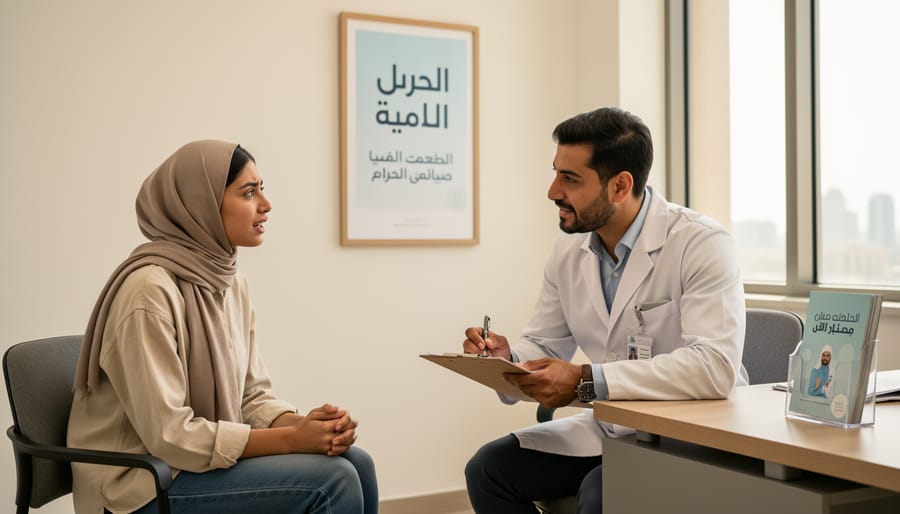
If you’re experiencing anxiety and speak Arabic, knowing where to turn can feel overwhelming, especially when you’re navigating a new healthcare system or worried that language will become a barrier. The good news is that seeking support in your own language is increasingly possible across Canada, and you don’t need to face this alone.
Start by identifying the type of support that fits your current needs. If you’re experiencing severe anxiety symptoms, such as panic attacks, inability to function in daily activities, or thoughts of self-harm, reach out for immediate help through a crisis line or emergency services. Many provinces now offer crisis support with interpretation services available. For ongoing concerns that impact your quality of life but aren’t emergencies, booking an appointment with your family doctor is a practical first step. Explain your symptoms using the terms you’re comfortable with, whether that’s قلق (qalaq) or simply describing how you feel physically and emotionally.
Finding an Arabic-speaking mental health professional takes a bit of research, but several pathways exist. Start with your family doctor, who can refer you to therapists or psychiatrists and may know providers who speak Arabic. Contact cultural community organizations in your city, many Arabic Canadian associations maintain lists of mental health professionals who serve the community. Check with provincial mental health associations, which often have searchable directories where you can filter by language. Some therapists also offer services through video platforms, expanding your options beyond your immediate area.
Here’s a practical approach to get help when you’re ready:
- Write down your symptoms and concerns in Arabic first, then prepare a brief English version if needed for initial appointments.
- Call your provincial health information line (like 811 in many provinces) and ask specifically about Arabic-speaking mental health services in your area.
- Request a professional interpreter for your appointments if an Arabic-speaking provider isn’t available, this is your right and costs you nothing.
- Review the Arabic-language resources from organizations like the Royal College of Psychiatrists to better understand what you’re experiencing and what treatment options exist.
- Bring a trusted friend or family member to appointments if that helps you feel more comfortable communicating.
Understanding what to expect can ease some anxiety about seeking help. Your first appointment will typically involve discussing your symptoms, how long you’ve experienced them, and how they affect your daily life. The provider might ask about your family history, stressful life events, and what you’ve already tried to manage the anxiety. Treatment often combines approaches: talk therapy (like cognitive behavioral therapy), medication, lifestyle changes, and community support. You won’t be pressured into any single path, and good providers will work with you to find what feels right.
Many Arabic-speaking Canadians have found that even accessing information in Arabic, reading about anxiety disorders, understanding that what they’re experiencing has a name and is treatable, provides immense relief. You’re not weak for needing support. You’re taking a strong, informed step toward feeling better.
The path to mental health support shouldn’t be complicated by language barriers. For Arabic-speaking Canadians, accessing anxiety resources in قلق, your own language, is becoming more possible every day. Organizations across Canada are recognizing that true mental health equity means providing care in the languages communities actually speak at home.
Anxiety is highly treatable, whether you seek therapy, medication, community support, or a combination of approaches. The symptoms that feel overwhelming today can become manageable with the right help. And that help exists in Arabic, from translated information sheets to Arabic-speaking professionals who understand both your words and your cultural context.
Reaching out for support isn’t weakness, it’s wisdom. When you find resources that speak your language, you’re not just helping yourself; you’re opening doors for family members, friends, and others in your community who might be struggling silently. Share what you discover. Talk about mental health openly when you can. Every conversation helps chip away at stigma and builds a stronger, more supportive community.
You deserve care that feels accessible, respectful, and clear. Your language matters, your experience matters, and help is available.