judy
Music calms anxiety by slowing heart rate, lowering cortisol levels, and engaging areas of the brain that regulate emotion. When you’re feeling overwhelmed, the right sounds can shift your nervous system from fight-or-flight mode into a state of rest, often within minutes. This isn’t distraction or wishful thinking. It’s a physiological response backed by decades of research and used in clinical settings alongside therapy and medication.
If you’re reading this now, chances are your chest feels tight, your thoughts are racing, or sleep feels impossible. You’re not alone. Anxiety affects millions of Canadians, and while music won’t replace professional support when you need it, it offers something rare: immediate relief you can access anytime, without a prescription or appointment.
The challenge isn’t whether music works. It’s finding what works for you. Classical piano might ground one person while nature sounds or lo-fi beats resonate with another. Some need silence broken gently, others crave rhythm to match their pulse before guiding it slower. What matters is learning to use music intentionally, not as background noise but as a tool you control.
This guide walks through the science in plain language, helps you build a personalized toolkit, and shares stories from people who’ve made music a cornerstone of managing their mental health. You’ll leave with practical strategies to try today and the understanding that seeking calm through sound is both valid and powerful.
What Happens in Your Brain When Music Meets Anxiety
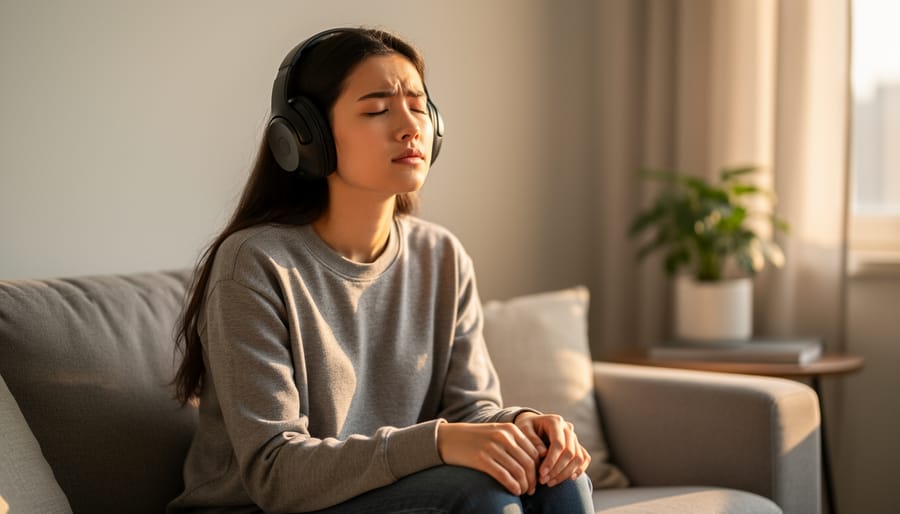
When anxiety takes hold, your body enters what’s sometimes called fight-or-flight mode. Your heart races, your breathing quickens, and stress hormones like cortisol flood your system. This isn’t just in your head, it’s a real, measurable physiological response.
Here’s where music becomes more than a pleasant distraction. When you listen to calming music, your body begins to shift out of that heightened state. Your heart rate can gradually slow to match slower musical rhythms. Your breathing naturally deepens and steadies. Research shows that listening to music you find soothing can actually lower cortisol levels in your bloodstream.
Music also activates your brain’s reward centers, releasing dopamine, the same chemical associated with feelings of pleasure and wellbeing. Meanwhile, it can quiet the amygdala, the part of your brain that processes fear and threat responses. When you’re anxious, that amygdala is working overtime, interpreting everything as potentially dangerous.
The parasympathetic nervous system, your body’s built-in calming mechanism, responds particularly well to certain types of musical patterns. This system is responsible for the “rest and digest” state that counters anxiety’s “fight or flight.” Music doesn’t override your anxiety through willpower or distraction. It works with your body’s existing calming systems, essentially giving them permission and encouragement to activate.
This science matters because it validates what you might already sense: when music helps your anxiety, something real is happening. You’re not imagining the relief.
Finding Your Calm: What Types of Music Work Best
Slow Tempo and Instrumental Pieces
When your thoughts are spinning, the last thing you need is more stimulation. That’s where slower music comes in. Tracks hovering between 60 and 80 beats per minute roughly match a resting heart rate, which can gently encourage your body to downshift from high alert. Your breathing may start to slow without you even noticing.
Instrumental music removes another layer of mental work. Lyrics demand processing, especially when you’re already overwhelmed by internal chatter. Without words competing for attention, pieces like smooth instrumental deep focus tracks give your mind space to settle. Piano, strings, or ambient electronic textures can wash over you rather than pull you into another narrative.
This isn’t about forcing yourself to enjoy classical music if that’s not your thing. The principle is simple: less complexity, slower pace, room to breathe. Even familiar songs in acoustic or instrumental versions can offer this kind of gentle anchor when anxiety strikes.
Your Comfort Playlist Matters Too
Sometimes the most calming music isn’t designed for relaxation at all. Sarah, a teacher in Halifax, found that her anxiety quieted most effectively not with meditation tracks, but with the folk songs her grandmother used to play. “Everyone kept telling me to try spa music,” she says. “But what actually helped was stuff that felt like home.”
There’s real validity to this approach. Familiar music triggers positive memories and associations that can interrupt anxious thought patterns. That album from your university days, the soundtrack from a meaningful time in your life, even upbeat songs you genuinely love, if they make you feel safer or more grounded, they’re working.
The key is noticing what happens in your body and mind when you listen. Does your breathing slow down? Do your thoughts feel less frantic? Trust those responses over any expert’s prescription about what “should” calm you.
Nature Sounds and Ambient Textures
Sometimes the most calming “music” isn’t music at all. Rain falling on leaves, ocean waves rolling in steady rhythm, a gentle stream, these natural sounds can anchor your racing thoughts to something real and unchanging when anxiety makes everything feel chaotic.
Ambient textures work differently than melody. There’s no structure to follow or anticipate, which means your mind can rest instead of engage. Many people find that layering soft environmental sounds, like rainfall with distant thunder, or forest sounds with birdsong, creates a cocoon of calm that feels protective without being isolating.
You don’t need a forest nearby. Apps and streaming services offer everything from crackling fires to city rain to white noise variations. What matters is finding sounds that make your nervous system feel safe. Some days that might be complete silence. Other days, gentle background sound keeps anxious thoughts from filling every space.
Creating Your Personal Anxiety-Relief Soundtrack
When to Reach for Music
Music doesn’t have to be a last resort when panic sets in. Think of it as a versatile companion that can support you at different points throughout your day, depending on what you need.
Before anxiety peaks. You might notice early warning signs, tightness in your chest, racing thoughts starting to build, a feeling of being on edge. Playing calming music during these moments can interrupt the escalation before it becomes overwhelming. It’s like catching yourself before you slip.
During acute episodes. When anxiety hits hard and your mind feels out of control, music can provide an anchor point. Focus on the sound, count the beats, or simply let it fill the space around you. It won’t make everything instantly better, but it can help you ride out the intensity without fighting against it.
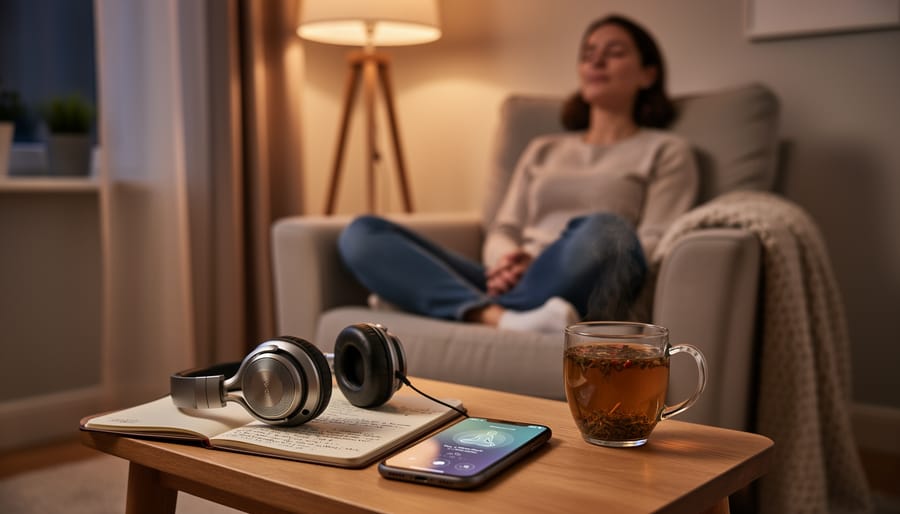
Preparing for sleep. Many people with anxiety dread bedtime because their mind races the moment things get quiet. A consistent routine of gentle music thirty minutes before sleep can signal to your nervous system that it’s safe to wind down.
Daily anchors. Consider music during transitions, your morning coffee, commute, or evening walk. These predictable moments become small pockets of calm woven into your routine, rather than something you only grab when you’re desperate.
The key is experimenting without pressure to find what feels natural for you.
Building Playlists That Match Your Needs
Start with one playlist. Just one. Choose a moment in your day when anxiety tends to show up, maybe morning transitions, work stress, or that hour before bed when your mind replays everything. Build a 20-30 minute playlist specifically for that moment.
Pay attention to energy matching. If your anxiety feels jittery and racing, don’t jump straight to ultra-calm music. Start with something that meets your current energy level, maybe moderately paced instrumental music, then gradually shift toward slower, gentler tracks. This “ramping down” helps your nervous system follow along rather than resist.
Create playlists with clear purposes. You might need different soundtracks for different needs: one for focus when anxiety makes concentration hard, another for unwinding after overwhelming days, perhaps one for grounding during panic symptoms. Label them honestly, “When Everything Feels Too Much” is more useful than “Relaxation Mix 3.”
Keep them short enough to finish. A 15-minute playlist you actually use beats an hour-long collection you abandon halfway through. You can always replay it.
Test and adjust without judgment. A song that helped last week might feel irritating today. That’s normal. Remove it. Add something new. Your needs change, and your playlists can too.
Save songs that work in a “master calm” list, then pull from there to build specific playlists. Over time, you’ll discover your personal patterns, certain artists, instruments, or sounds that consistently help. Trust what you notice about yourself.
Real Stories: How Canadians Use Music for Anxiety Relief
Sarah, a teacher in Halifax, discovered her approach by accident during a particularly overwhelming week last spring. “I thought I needed those specially designed relaxation playlists everyone talks about,” she says. “But when my anxiety spiked before a difficult parent meeting, I put on the indie folk album I’d been listening to in university. Something about those familiar melodies just let me breathe again.” Now Sarah keeps what she calls her “anchor playlist” ready, songs that feel like old friends rather than prescribed medicine. On her worst days, she doesn’t judge herself for choosing The Tragically Hip over binaural beats.
Marcus, who manages his generalized anxiety disorder in Toronto, takes a different path entirely. He creates what he calls “mood bridges” using instrumental jazz and ambient electronic music. “When my thoughts are racing at 3 a.m., I can’t handle anything with words or memories attached,” he explains. “I need something that exists in its own space.” His nighttime playlist starts with slightly uptempo piano pieces, gradually shifting to slower, more spacious tracks. The progression gives his nervous system permission to wind down without feeling forced. Some nights he listens to the whole sequence; other times just two songs are enough.
What connects both approaches is the absence of rules. Sarah found relief in nostalgia and meaning. Marcus needed structure without emotional weight. Neither discovered their method from an expert recommendation, they learned by paying attention to what actually helped in the moment. Your own relationship with music and anxiety will likely look different from both of theirs, and that’s exactly how it should be.
When Music Alone Isn’t Enough
Music can be a powerful ally when anxiety takes hold, but it’s okay if it doesn’t always feel like enough. Some days, your racing thoughts might need more support than a playlist can provide, and that’s completely normal. Recognizing when you need additional help isn’t a failure, it’s an important part of taking care of yourself.
If anxiety is significantly disrupting your daily life, relationships, or ability to function, it’s time to get help for anxiety from a mental health professional. Therapy approaches like cognitive-behavioral therapy can give you concrete tools for managing anxious thoughts, while a healthcare provider can help determine if medication might be beneficial alongside your self-care strategies. Sometimes what feels like general anxiety might actually be something more specific, like OCD vs anxiety disorders, and getting the right diagnosis opens doors to more targeted support.
Music works even better when it’s part of a broader approach to mental wellness. Other strategies that complement your calming soundtrack include:
- Regular physical movement, even just short walks
- Breathing exercises and mindfulness practices
- Connecting with supportive friends or community
- Establishing consistent sleep routines
- Journaling or creative expression
Think of these tools as a personal toolkit rather than a rigid treatment plan. Some days music might be exactly what you need. Other days, you might reach for movement, connection, or professional support. Building this flexible approach gives you options when anxiety shows up, and that sense of preparedness can itself be calming.
You don’t need the perfect playlist to start. Pick one song that feels calming today, and notice what happens when you listen. Your relationship with music and anxiety will shift over time, and that’s exactly how it should work.
If you’re supporting someone else, these same principles can help anxious teens find their own pathways to calm. And remember, music works best alongside other ways to support yourself whether that’s talking to someone you trust, moving your body, or simply stepping outside.
Your anxiety is real. Your efforts to manage it matter. And the song that helps you breathe a little easier? That’s worth celebrating.