judy
judy Every May, Canadians pause to acknowledge a truth many of us carry quietly: mental health challenges touch nearly every family, workplace, and community across the country. Mental Health Awareness Week offers more than recognition. It creates space for honest conversations that too often remain unspoken.
This year’s campaign brings fresh momentum to an ongoing movement. Partners for Mental Health Canada continues building bridges between individual wellness and collective action, reminding us that healing happens not in isolation but through connection. The week serves as both mirror and window, reflecting our shared struggles while illuminating pathways forward.
What makes 2026’s awareness week particularly significant is its emphasis on the relationship between physical movement and emotional resilience. Research consistently shows that fitness and mental wellness intertwine in ways we’re only beginning to understand fully. When we move our bodies, we shift our minds. When we gather in community activities, we reduce the isolation that feeds anxiety and depression.
Throughout this article, you’ll discover specific dates for this year’s events, practical ways to participate whether you’re an individual seeking support or an organization wanting to make a difference, and stories from Canadians who’ve found strength through community connection. Mental health awareness isn’t confined to seven days in May. But this dedicated week gives us permission to speak up, reach out, and remember that none of us walk this path alone.
The conversation starts now.
What Mental Health Awareness Week Canada Means in 2026
Mental Health Awareness Week in Canada takes place from May 4-10, 2026, marking an important shift in how we talk about mental wellness. This year, Partners for Mental Health Canada is centering the conversation around a powerful theme: the connection between mental health and physical fitness. Rather than treating these as separate aspects of well-being, the organization is highlighting how movement, exercise, and physical activity directly support emotional resilience and psychological health.
The approach reflects a growing understanding that our minds and bodies aren’t separate entities. When Sarah from Winnipeg started walking 20 minutes each morning, she didn’t expect it to help with her anxiety. But within weeks, she noticed the difference. Stories like hers are exactly what Partners for Mental Health Canada wants to amplify this year.
What makes 2026 different is the intentional focus on accessibility and practical action. Instead of solely raising awareness about mental health challenges, the campaign provides tangible ways for Canadians to support their well-being through movement. You don’t need a gym membership or athletic ability. The message is simple: any form of physical activity counts, whether that’s gardening, dancing in your kitchen, or taking the stairs.
This year’s programming includes virtual fitness challenges, community walk groups, and educational webinars exploring the science behind exercise and mental wellness. Partners for Mental Health Canada is collaborating with fitness instructors, physiotherapists, and mental health professionals to create resources that meet people where they are. The goal isn’t perfection. It’s progress, connection, and recognizing that taking care of our bodies is taking care of our minds.
The Science Behind Movement and Mental Wellness
When you move your body, something remarkable happens inside you. Your brain releases endorphins during exercise chemicals that naturally lift your mood and create feelings of wellbeing. Think of them as your body’s built-in support system, always ready to help you feel better.
Physical activity also reduces stress hormones like cortisol and adrenaline. Even a short walk can shift your body from a state of tension to one of calm. Many Canadians discover that movement becomes their go-to tool during difficult moments, helping them process emotions and find clarity.
The benefits extend beyond the immediate mood boost. Regular movement improves sleep quality which creates a positive cycle for your mental health. Better sleep means more energy to face challenges, greater emotional resilience, and improved ability to connect with others.
There’s also something powerful about setting a goal and achieving it. Whether you’re walking around your neighborhood for the first time in months or completing a yoga session, these accomplishments build self-esteem. You prove to yourself that you’re capable of change.
Sarah, a teacher from Toronto, shares her experience: “I started with just five minutes of stretching each morning during a particularly hard winter. Those five minutes showed me I could take care of myself, even when everything felt overwhelming. It wasn’t about becoming an athlete. It was about showing up for myself.”
The beauty of this connection between movement and mental wellness is that you don’t need special equipment, expensive memberships, or hours of free time. Your body is designed to move, and it responds positively to whatever activity you can manage today. Some days that might be a dance session in your kitchen. Other days it might be gentle stretches while sitting down.
What matters is finding ways to move that feel good to you, at your own pace.
Events and Resources from Partners for Mental Health Canada
Virtual Fitness and Mental Health Sessions
During Mental Health Awareness Week 2026, Partners for Mental Health Canada is offering a series of free virtual fitness and mental health sessions designed to meet you where you are. These online workshops blend gentle movement with mindfulness practices and mental health education, creating a welcoming space for Canadians from coast to coast.
Whether you prefer yoga, light stretching, or simple breathing exercises, these sessions are tailored for all bodies and abilities. No previous fitness experience is needed. The workshops are led by certified instructors who understand the powerful connection between physical movement and emotional wellbeing.
Each session includes time for connection and reflection. Participants can join live to engage with others or access recorded versions that fit their schedule. The format allows people in rural communities, those with mobility challenges, or anyone balancing busy lives to participate fully.
Sarah, a participant from rural Saskatchewan, shared how these sessions became a lifeline during her recovery from anxiety. “I could join from my living room without worrying about keeping up with others,” she explained. “The instructors made it clear that moving my body in any way was enough.”
Registration details and the full schedule of virtual sessions are available through the Partners for Mental Health Canada website throughout the awareness week.
Community Walk and Talk Events Across Canada
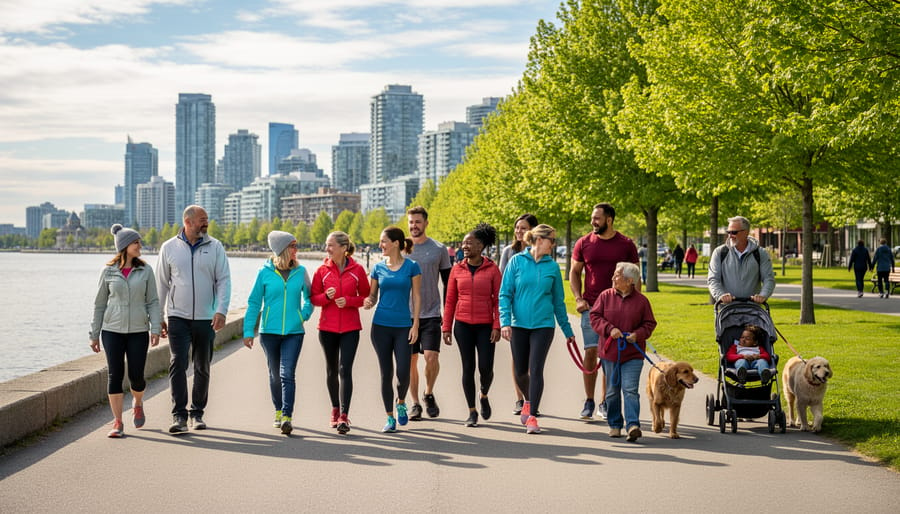
Across Canada, communities gather during Mental Health Awareness Week for Walk and Talk events that blend physical activity with meaningful connection. These free, informal walking groups take place in cities from Vancouver to Halifax, creating safe spaces where people can share their experiences while moving together.
The concept is simple but powerful. Participants meet at designated parks or community spaces and walk together for 30 to 60 minutes. There’s no pressure to share your story, but many find that walking side by side, rather than face to face, makes opening up feel more natural. Some walk in comfortable silence. Others form new friendships that extend beyond the event itself.
Local mental health organizations and community groups host these gatherings, often partnering with Partners for Mental Health Canada to coordinate timing and resources. Previous years have seen hundreds of walkers in Toronto’s High Park, family-friendly routes along Montreal’s Lachine Canal, and evening walks through Calgary’s river pathways.
Check your city’s events calendar or local mental health organization websites for specific times and locations. Many walks welcome people of all fitness levels and abilities, with accessible routes available. You’ll typically find volunteer support staff wearing identification badges, ready to provide information about local mental health resources.
Simple Ways to Connect Fitness and Mental Health This Week
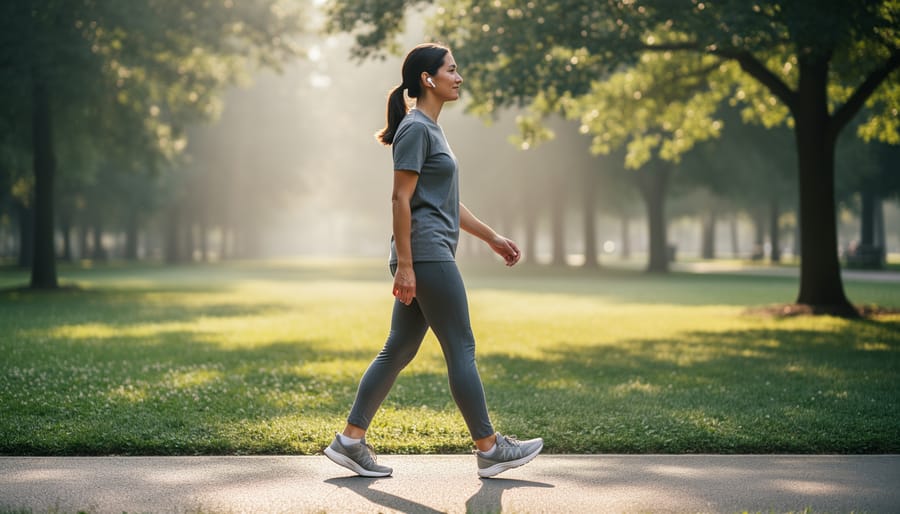
You don’t need a gym membership or fancy equipment to support your mental health through movement this week. What matters most is finding ways to move that feel good for you, right where you are.
Start with a five-minute walk around your neighbourhood or even just to the end of your street. Notice how the air feels on your skin, the sounds around you, the colour of the sky. This simple act gets your body moving while giving your mind a chance to settle. Many Canadians find that stepping outside, even briefly, helps shift their perspective on a difficult day.
Try stretching while you watch TV or wait for your morning coffee to brew. Roll your shoulders, reach your arms overhead, or gently twist from side to side. These small movements release tension you might not even realize you’re carrying.
Dance to one song you love. Put on music that makes you feel something and let your body respond however it wants. There’s no right or wrong way to do this. Close the curtains if that makes you more comfortable.
If you’re working from home, stand up and move for two minutes every hour. Walk to get a glass of water, do a few gentle squats, or simply stand and breathe deeply. These micro-breaks can prevent the mental fog that comes from sitting too long.
Consider inviting a friend or family member to join you for any movement you choose. Having company can make it easier to get started, and connection itself supports mental wellness. You might find that a walk with someone you trust becomes a space where conversations flow more naturally.
The goal isn’t to push yourself hard or meet anyone else’s expectations. During Mental Health Awareness Week and beyond, focus on movement that brings even a small sense of relief, energy, or calm. That’s enough.

Real Stories: How Movement Changed My Mental Health
Sarah from Toronto discovered running during a particularly difficult winter. “I was struggling with anxiety and barely sleeping,” she shares. “A friend convinced me to try a beginner’s running group. I couldn’t even make it around the block at first.” Six months later, those early morning runs became her anchor. The combination of fresh air, community support, and physical exertion helped quiet the racing thoughts that had consumed her evenings.
For Marcus in Vancouver, movement looked entirely different. Living with depression, he found traditional gym environments overwhelming. “Yoga seemed too calm for what I was feeling,” he recalls. “But a trauma-informed class changed everything.” The instructor’s gentle approach and focus on breathwork gave him tools he could use during difficult moments. He practices in his living room now, even just ten minutes on hard days.
Jasmine’s experience with dance therapy surprised her. After experiencing postpartum anxiety, she joined a community dance class in Calgary specifically designed for new parents. “Nobody cared what we looked like or if we knew the steps,” she says. “We just moved together, babies watching from their carriers.” The social connection mattered as much as the physical activity.
David, who manages PTSD, walks. That’s it. “People talk about intense workouts, but walking my dog twice daily keeps me grounded,” he explains from his home in Halifax. “It gets me outside, creates routine, and gives my mind space to process without pressure.”
These stories aren’t about fitness transformations or athletic achievements. They’re about finding what works, however small or unconventional. Movement became a tool these community members could control during times when so much felt uncertain.
Get Involved and Share Your Journey
Mental Health Awareness Week doesn’t end when the calendar turns. The conversations we start now, the connections we make, and the habits we build can transform how we approach mental health throughout the year. This week serves as a powerful catalyst, but the real change happens when we carry these lessons forward.
Partners for Mental Health Canada offers a wealth of resources to help you continue your journey. Visit their website to access toolkits, conversation starters, and educational materials designed for individuals, workplaces, and communities. Whether you want to support someone in your life or find help for yourself, these resources provide practical guidance rooted in compassion and understanding.
Your story matters. Sharing your experiences with mental health and fitness can inspire others who might be struggling in silence. Social media provides a platform to break down stigma and build community, but remember that sharing should feel empowering, not obligatory.
Consider how you’ll integrate what you’ve learned into your daily routine. Maybe it’s committing to a morning walk, joining a community fitness group, or simply checking in with friends more regularly.
The movement toward better mental health grows stronger with each person who participates. By staying engaged beyond this single week, you contribute to a culture where mental health is treated with the same importance as physical health. Start small, stay consistent, and remember that progress isn’t always linear. Every step counts.
Mental Health Awareness Week serves as a powerful reminder, but the journey toward wellness continues every single day of the year. The connection between physical activity and mental health isn’t a one-time discovery. It’s an ongoing practice that looks different for everyone. Maybe it’s a morning walk that clears your mind, a yoga session that helps you breathe through anxiety, or simply stretching during a difficult moment at work.
You’re not alone in this journey. Thousands of Canadians are working toward better mental health alongside you, and support is always within reach. Partners for Mental Health Canada offers resources and guidance throughout the year, not just during awareness week. Whether you’re taking your first steps toward getting help or supporting someone else on their path, there’s a community ready to welcome you.
The conversation doesn’t end when May concludes. Keep moving, keep talking, and keep showing up for yourself and others. Small steps add up to meaningful change, and every effort you make toward wellness matters.