judy
Agoraphobia and social anxiety disorder are distinct conditions separated by a crucial difference: agoraphobia centers on the fear of being trapped or helpless in specific situations, while social anxiety disorder stems from the fear of judgment or embarrassment in social settings. If you or someone you care about is struggling to leave the house, avoid crowds, or feel overwhelmed in public spaces, understanding which condition you’re facing matters because the triggers, thought patterns, and paths to recovery follow different routes.
Both conditions share striking similarities. They cause significant distress, last six months or more, and trigger avoidance behaviors that can reshape your entire life. In both cases, the fear feels overwhelming even when the actual danger is minimal or nonexistent. That overlap explains why so many Canadians searching for answers feel confused about what they’re experiencing.
The distinction becomes clearer when you look at the root fear. Someone with agoraphobia might avoid a crowded concert because they’re afraid of being unable to escape if panic strikes. Someone with social anxiety disorder might skip the same event because they worry about being watched, judged, or humiliated. Same situation, completely different internal experience.
This article will walk you through the core features of each condition, compare them side by side across the dimensions that matter most, and help you recognize which pattern fits your experience. You’re not alone in seeking this clarity, and understanding the difference is the first step toward finding the right support and reclaiming the life you want to live.
Agoraphobia and Social Anxiety at a Glance
Both agoraphobia and social anxiety disorder involve intense fear and avoidance, but understanding what drives each condition can help you recognize which experience feels more familiar. While the two share several characteristics, both cause significant distress, both involve avoiding situations that trigger fear, and both feature anxiety that’s out of proportion with actual danger, the source of that fear differs fundamentally.
The most critical distinction lies in what you’re actually afraid of. Social anxiety centers on a fear of judgment or embarrassment in situations where others might evaluate you. Agoraphobia, by contrast, stems from fearing you’ll be trapped in vulnerable or dangerous situations with no way to escape or get help. Someone with social anxiety might avoid a party because they fear saying something foolish; someone with agoraphobia might avoid the same party because they fear being unable to leave if panic strikes.
Both conditions typically persist for six months or more, in clinical terms, social anxiety requires a marked persistent fear of at least 6 months before diagnosis. This extended duration distinguishes them from temporary nervousness or situational stress.
| Aspect | Agoraphobia | Social Anxiety Disorder |
|---|---|---|
| Root Fear | Being trapped with no escape in vulnerable situations | Judgment, embarrassment, or negative evaluation by others |
| Feared Situations | Crowded spaces, public transit, open areas, enclosed spaces | Performance scenarios, conversations, eating in public, being observed |
| Avoidance Pattern | Avoiding places where escape feels difficult or help unavailable | Avoiding situations involving interaction or potential scrutiny |
| Typical Duration | Six months or more | Six months or more |
| Can Co-Occur | Yes, may develop alongside panic disorder or social anxiety | Yes, can exist with agoraphobia or other conditions |
It’s entirely possible to experience both conditions simultaneously, which can make understanding your own experience more complex but no less valid.
Understanding Each Condition
What Is Agoraphobia?
Agoraphobia is an anxiety disorder that creates intense fear around specific situations where escape might be difficult or help might not be available if panic strikes. While it can develop on its own, it often appears alongside panic disorder, and the two conditions can reinforce each other in challenging ways.
At its core, agoraphobia involves fearing vulnerable or dangerous situations where you feel trapped with no clear way out. This isn’t just general nervousness, it’s an overwhelming sense that if something goes wrong, you’ll be stuck in a frightening situation without help or an exit route.
The situations that trigger agoraphobia are surprisingly specific. Common examples include crowded places like shopping malls or concerts, public transportation such as buses or trains, wide-open spaces like parking lots, or enclosed areas like elevators. What ties these together isn’t the setting itself, but the feeling of being trapped or unable to escape if anxiety or panic sets in.
People experiencing agoraphobia often worry about having a panic attack in these situations, which creates a cycle: the fear of panic makes the situation more distressing, which increases the likelihood of panic symptoms. Over time, this can lead to avoiding more and more situations, sometimes to the point where leaving home feels impossible.
This condition causes real distress and can significantly impact daily life, making routine activities like grocery shopping or commuting feel overwhelming. The fear is out of proportion to any actual danger, but it feels entirely real to the person experiencing it.
What Is Social Anxiety Disorder?
Social anxiety disorder is a mental health condition where the fear of being judged, embarrassed, or negatively evaluated by others becomes so overwhelming that it interferes with daily life. Unlike the occasional nervousness most people feel before a presentation or first date, social anxiety involves persistent, intense worry about social situations that can last six months or more.
For someone living with social anxiety, everyday interactions can feel like high-stakes performances. Ordering coffee, speaking up in a meeting, eating in front of others, or attending a gathering might trigger intense physical symptoms like racing heart, sweating, or nausea. The core fear isn’t about the situation itself but about how others might perceive them, worrying they’ll say something foolish, appear awkward, or be rejected.
This fear often feels out of proportion to the actual risk. A person with social anxiety might spend hours replaying a brief conversation, convinced they’ve humiliated themselves, even when no one else noticed anything unusual. Over time, many people start avoiding situations where they might be observed or evaluated, which can shrink their world significantly.
It’s important to recognize that social anxiety isn’t shyness or introversion. It’s a legitimate condition that causes real distress and can affect relationships, work opportunities, and overall quality of life. The emotional weight of constantly anticipating judgment and trying to avoid perceived social threats is exhausting and isolating.
Understanding social anxiety as a treatable condition, not a personal failing, is the first step toward finding support and reclaiming the experiences that matter.
How They’re Similar: Where Agoraphobia and Social Anxiety Overlap
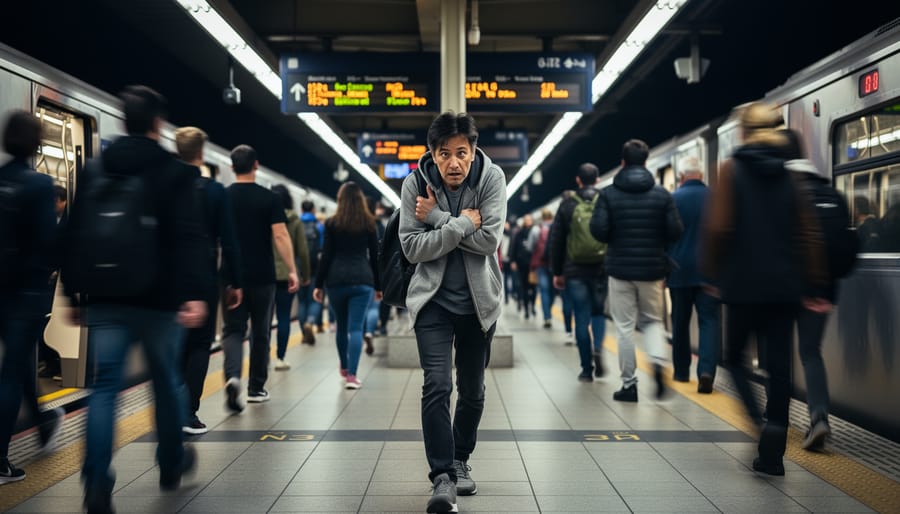
When you’re struggling with intense anxiety that keeps you from living your normal life, understanding what you’re experiencing can feel overwhelming. Both agoraphobia and social anxiety disorder share enough common features that it’s entirely understandable why people find them confusing to tell apart.
The similarities run deeper than many realize. Both conditions fundamentally alter how you move through the world, creating patterns that can feel strikingly familiar:
- Both typically persist for six months or more, making them chronic conditions rather than temporary phases
- Both involve active avoidance of situations that trigger fear, leading to increasingly restricted lives
- Both feature anxiety that’s out of proportion with the actual danger present
- Both cause significant distress or impairment in daily functioning, affecting work, relationships, and wellbeing
- Both can trigger physical symptoms like rapid heartbeat, sweating, trembling, and difficulty breathing
These overlapping features explain why someone experiencing either condition might initially struggle to name what they’re going through. The physical sensations feel nearly identical. The impulse to avoid certain situations creates similar lifestyle restrictions. The intensity of the fear doesn’t match what others around you seem to experience in the same circumstances.
Both conditions also carry a painful awareness that your fear doesn’t quite make sense. You might recognize logically that you’re safe, yet the anxiety persists with convincing force. This disconnect between what you know intellectually and what you feel emotionally shows up in both agoraphobia and social anxiety.
The impact on relationships mirrors itself across both conditions too. Declining invitations, canceling plans, or needing others to accommodate your limitations can strain connections with friends and family who don’t understand what you’re experiencing. That isolation often compounds the original anxiety, creating cycles that feel impossible to break without support.
Understanding these similarities helps explain why professional assessment matters. The shared features are real, but the differences in what drives these patterns determine which treatments will help most effectively.
How They Differ: The Key Distinctions That Matter
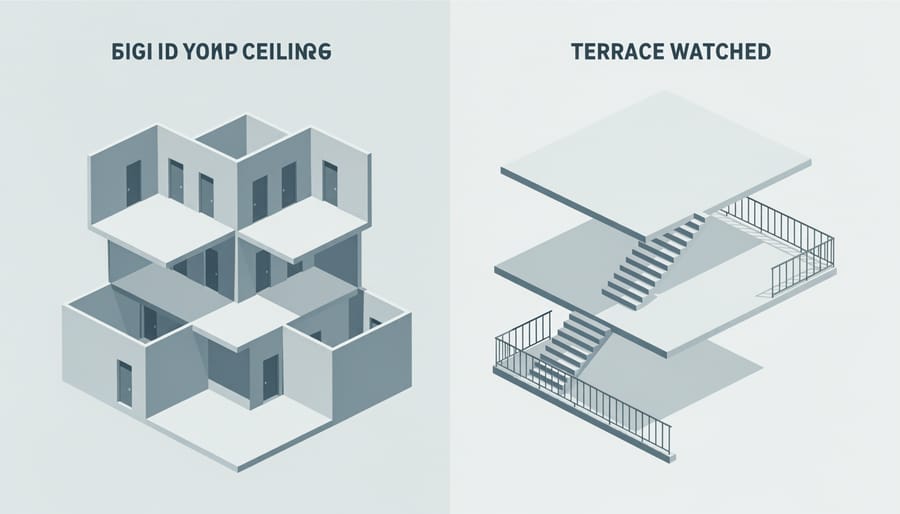
The Root Fear: What’s Actually Driving the Anxiety
The difference between these two conditions comes down to what you’re actually afraid of when anxiety strikes.
If you have social anxiety, your fear centers on what other people think of you. You might dread giving a presentation because you’re convinced you’ll stumble over your words and everyone will judge you as incompetent. Or you might avoid parties because you worry about saying something embarrassing, being laughed at, or not fitting in. The anxiety lives in the space between you and others’ perceptions.
With agoraphobia, the fear is fundamentally different. You’re not worried about judgment. You’re afraid of being stuck somewhere dangerous or overwhelming with no way out and no one to help. Imagine sitting in the middle row of a crowded theater and suddenly feeling intense panic, knowing you can’t leave quickly without climbing over people. Or standing on a bridge and feeling terrified of losing control with no escape route available. The fear is about being trapped in a vulnerable moment.
Here’s a concrete example: Two people avoid taking the subway. The person with social anxiety worries that others will notice their nervousness and think something’s wrong with them. The person with agoraphobia fears the subway itself, being underground in a confined space where they can’t easily escape if panic hits.
If either pattern sounds familiar, it’s worth taking time to get help from someone who can properly assess what you’re experiencing.
The Situations That Trigger Fear
The situations that provoke anxiety look quite different between these two conditions, even when they appear to overlap on the surface.
Social anxiety disorder centers on scenarios involving evaluation, interaction, or performance. You might dread giving a presentation at work, attending a party where you’ll need to mingle, eating in front of others, or making small talk with neighbors. The common thread isn’t the physical space, it’s the presence of people who might judge you. A crowded concert might feel manageable if you’re anonymous in the crowd, but a small dinner party where you’re expected to contribute feels impossible because all eyes are on you.
Agoraphobia, by contrast, focuses on physical situations where escape feels difficult or help seems unavailable if something goes wrong. The fear attaches to places like shopping malls, buses or trains, parking lots, bridges, or being far from home. It’s not about who’s watching you, it’s about being trapped. You might feel fine at a quiet coffee shop near your car but panic on a subway because you can’t get off until the next stop.
Here’s a telling difference: someone with social anxiety might avoid a crowded grocery store on Saturday because they fear awkward encounters, while someone with agoraphobia avoids it because the checkout line feels like a trap with no quick exit. The crowd matters for entirely different reasons.
How Avoidance Shows Up Differently
While both conditions involve steering clear of difficult situations, the avoidance looks distinctly different because each person is trying to protect themselves from a fundamentally different outcome.
Someone with social anxiety avoids situations where they might be watched, evaluated, or judged. They’ll skip the office party, decline public speaking opportunities, or avoid eating in restaurants, not because of the physical space itself, but because others might notice them, form negative opinions, or witness something embarrassing. The avoidance centers on visibility and potential humiliation. A person might feel comfortable grocery shopping alone at midnight but cancel lunch with colleagues, because the fear isn’t about the location, it’s about the social scrutiny.
With agoraphobia, the avoidance revolves around feeling trapped or unable to get help if panic strikes. Someone might refuse to ride the subway, sit in the middle of a movie theater row, or drive on highways, situations where escape feels difficult or impossible. They’re not worried about what strangers think of them; they’re worried about being stuck somewhere when they need to leave immediately or can’t reach safety. A person with agoraphobia might happily attend a backyard gathering with friends but refuse to enter a crowded shopping mall, because the fear centers on physical entrapment, not social judgment.
These patterns help distinguish which condition might be at play.
Recognizing Which Condition You May Be Experiencing
If you’re wondering whether your experiences match agoraphobia or social anxiety disorder, start by paying attention to what specifically triggers your anxiety. When you feel overwhelmed or want to avoid a situation, ask yourself: Am I worried about being judged, embarrassed, or humiliated by others? Or am I afraid of being trapped somewhere without a way to escape or get help? The answer to this question often points toward which condition might be at play.
Social anxiety typically shows up in situations involving other people, giving a presentation, attending a party, eating in front of others, or making small talk with coworkers. The underlying fear is about how you’ll be perceived. With agoraphobia, the fear centers on the situation itself rather than social evaluation. You might dread riding the bus not because strangers will judge you, but because you fear having a panic attack with no way to get off quickly. You might avoid shopping malls because the crowds make you feel trapped, not because you’re worried about looking awkward.
Mental health professionals diagnose conditions like agoraphobia and social anxiety disorder using the Diagnostic and Statistical Manual of Mental Disorders (DSM-5-TR) in the United States. This resource provides specific criteria that clinicians use to make accurate assessments. A professional evaluation considers how long symptoms have lasted (both conditions typically persist for six months or more), how significantly they affect your daily life, and whether other factors might explain your experiences.
It’s entirely possible to have both agoraphobia and social anxiety disorder at the same time. You might fear judgment in social situations while also feeling trapped in crowded spaces. Many people with anxiety disorders experience overlapping symptoms, which is another reason professional guidance matters. A clinician can help untangle what’s happening and develop a treatment approach that addresses your specific needs.
If you’re recognizing yourself in these descriptions, consider reaching out to a healthcare provider or mental health professional. You can also explore ways to support yourself while taking steps toward formal assessment. Remember that seeking clarity isn’t about labeling yourself, it’s about understanding your experiences so you can access the right support and move toward feeling better.
What Each Option Is
Before we can meaningfully compare these conditions, it helps to understand what each one actually is in straightforward terms.
Agoraphobia is an anxiety disorder where you experience intense fear about being in situations where escape might be difficult or help might not be available if you panic. The core experience isn’t about what others think, it’s about feeling trapped or vulnerable in specific physical situations. These might include crowded spaces, public transportation, parking lots, bridges, or even leaving home alone. The fear centers on “What if I can’t get out?” or “What if something happens and no one can help me?” This condition can develop alongside panic disorder, though not everyone with agoraphobia has panic attacks.
Social anxiety disorder involves persistent fear of social situations where you might be judged, embarrassed, or humiliated. Here, the worry is entirely about how others perceive you. Whether it’s speaking in meetings, eating in public, or making small talk, the underlying fear is “What will people think of me?” This goes far beyond normal nervousness, it’s anxiety so intense it disrupts your daily life. Parents noticing these patterns in anxious kids often see avoidance of school presentations, birthday parties, or team activities where performance matters.
Both conditions cause significant distress and typically persist for six months or more, but what you’re actually afraid of differs fundamentally.

Who Should Choose Which
Understanding whether you’re experiencing agoraphobia or social anxiety isn’t about self-diagnosis, it’s about recognizing patterns that help you seek the right support. If your primary fear centers on judgment, embarrassment, or being negatively evaluated by others in social situations, social anxiety is likely what you’re navigating. This includes worrying about speaking up in meetings, attending gatherings, or performing in front of others.
Choose agoraphobia as your focus if your anxiety spikes in situations where escape feels impossible or help seems unavailable, crowded buses, open parking lots, bridges, or standing in line at stores. The core fear here is being trapped or helpless, not what others think of you.
Many people experience elements of both conditions simultaneously, which is completely valid and surprisingly common. Either way, reaching out for a professional assessment provides clarity and opens pathways to effective treatment. You don’t need certainty to seek help.
If you’re trying to support someone experiencing these struggles, understanding these distinctions helps you respond with appropriate empathy. Encourage them to explore where to find help without pressure or judgment.
Agoraphobia vs Social Anxiety Terms to Know
Understanding the language around these conditions helps you communicate more effectively with healthcare providers and recognize experiences in yourself or others. Here are essential terms that clarify the discussion of agoraphobia and social anxiety:
- Panic Disorder
- A condition involving recurrent, unexpected panic attacks that often develops alongside agoraphobia. The fear of future attacks can drive avoidance of situations where escape feels difficult.
- Avoidance Behavior
- The pattern of staying away from situations that trigger fear or anxiety, which reinforces both conditions over time. This behavior provides temporary relief but strengthens the underlying anxiety in the long run.
- DSM-5-TR
- The Diagnostic and Statistical Manual of Mental Disorders, Fifth Edition, Text Revision, the standard resource healthcare professionals in the United States use to diagnose mental health conditions. It provides specific criteria that distinguish agoraphobia from social anxiety disorder.
- Safety Behaviors
- Actions people take to feel more secure in feared situations, like always having an exit route planned or bringing a trusted companion. While these strategies offer short-term comfort, they can prevent genuine recovery by maintaining the fear.
- Co-occurring Conditions
- When someone experiences two or more mental health conditions simultaneously, such as having both agoraphobia and social anxiety disorder. This overlap is common and requires comprehensive assessment for effective treatment.
Recognizing these terms helps demystify what you’re experiencing and makes conversations with mental health professionals more productive. When you understand the specific language, you’re better equipped to describe your symptoms accurately and advocate for the support you need.
Common Questions About Agoraphobia and Social Anxiety
Can you experience both agoraphobia and social anxiety at the same time? Absolutely. Mental health conditions don’t follow neat boundaries, and it’s entirely possible for someone to live with both disorders simultaneously. You might fear being trapped in a crowded subway car (agoraphobia) while also worrying intensely about what strangers think of you in that same space (social anxiety). When conditions overlap like this, the experience can feel especially overwhelming, which is why working with a mental health professional who can help you untangle these fears becomes even more valuable.
Can you have both agoraphobia and social anxiety disorder at the same time?
Yes, it’s possible to experience both conditions simultaneously. While they have distinct root fears, they can coexist and even amplify each other’s impact on your daily life.
Is agoraphobia always connected to panic disorder?
No, though agoraphobia can develop alongside panic disorder, it exists as a separate anxiety disorder. You can have agoraphobia without experiencing panic attacks.
Does social anxiety only affect people in large groups?
Not at all. Social anxiety can show up in small gatherings, one-on-one conversations, or even situations where you anticipate being observed or evaluated by just one other person.
How long do these conditions typically last?
Both agoraphobia and social anxiety disorder typically persist for six months or more when left untreated. However, with appropriate treatment and support, people often see significant improvement.
Treatment approaches for both conditions share some common ground while also addressing their unique features. Cognitive-behavioral therapy works well for both, helping you identify and challenge the thought patterns fueling your fear. For social anxiety, exposure therapy gradually helps you face social situations while building confidence. For agoraphobia, treatment focuses on safely confronting the specific situations you’ve been avoiding. Medication can support treatment for either condition, though the decision depends on your individual circumstances and should be made with your healthcare provider.
When should you reach out for professional help? If your fears are limiting your life in ways that matter to you, whether that’s avoiding job opportunities, missing out on relationships, or staying home when you’d rather go out, it’s worth talking to someone. The earlier you seek support, the more options you have and the less these patterns become entrenched. Remember that diagnosis using resources like the DSM-5-TR happens through careful assessment by trained professionals who understand these conditions’ nuances.
One question people often wonder about: Can one condition develop into the other? They’re distinct disorders with different core fears, so social anxiety doesn’t transform into agoraphobia or vice versa. However, living with untreated anxiety of any kind can sometimes lead to developing additional anxiety-related concerns. That’s another reason why getting support early matters.
Whether your fears center on judgment in social settings or being trapped without escape, you deserve compassion and support. Agoraphobia and social anxiety disorder are distinct conditions with different root causes and feared situations, but both are real mental health challenges that respond to treatment.
Thousands of Canadians navigate these conditions every day, and recovery is possible. With professional guidance, appropriate therapy, and sometimes medication, people living with either condition find ways to reclaim the activities and connections that matter to them. Progress might feel slow at times, but each small step forward counts.
You don’t have to face this alone. Reaching out to a healthcare provider is a courageous first move toward understanding what you’re experiencing and finding the right support. Mental health professionals can assess your symptoms, help clarify which condition aligns with your experience, and create a treatment plan tailored to your needs.
Partners for Mental Health Canada offers resources designed to support you through this journey, from educational materials to community connections with others who understand what living with anxiety feels like. We believe in breaking down stigma and building understanding.
If this article resonated with you, consider exploring our other mental health resources or sharing your story. Your experience matters, and speaking up helps others feel less isolated too. Recovery begins with a single conversation.