judy
judy Psychological safety at work is the shared belief that people can speak up, ask questions, admit mistakes, and raise concerns without fear of punishment or humiliation. It’s what separates workplaces where employees hide problems until they become crises from those where teams catch issues early and support one another through challenges.
For Canadians navigating their mental health at work, this concept isn’t abstract. Nearly one in four employed Canadians believe their workplace isn’t psychologically safe, according to Mental Health Research Canada. That climate of silence carries real consequences: stress that follows you home, anxiety about speaking up when something’s wrong, and the exhaustion of pretending everything’s fine when it isn’t.
When psychological safety exists, employees don’t waste energy calculating whether it’s safe to ask for help or flag a concern. They can focus on doing good work instead of managing fear. The benefits extend beyond individual wellbeing. Organizations that invest in supporting employee mental health see a return of four dollars for every dollar spent on mental health treatments, a reminder that creating safer workplaces makes practical sense alongside being the right thing to do.
This article explains what psychological safety looks like in practice, how it protects mental health, and the specific workplace factors that either build or erode it. You’ll also learn how researchers measure psychological safety and what the data tells us about Canadian workplaces in 2026.
What Psychological Safety at Work Means

Psychological safety at work is the shared belief that people can speak up, ask questions, admit mistakes, and raise concerns without fear of punishment, humiliation, or damage to their standing. It’s the feeling that you can be yourself, contribute honestly, and take interpersonal risks without worrying that colleagues or managers will shame or retaliate against you.
In a psychologically safe workplace, these behaviours feel normal and welcome:
- Speaking up
- Voicing ideas, questions, or dissenting views without fear that others will dismiss or mock you.
- Admitting mistakes
- Acknowledging errors openly, knowing the response will focus on learning and improvement rather than blame.
- Raising concerns
- Flagging problems, risks, or unethical behaviour without worrying about retaliation or being labelled a troublemaker.
- Psychological risk
- The interpersonal vulnerability involved in sharing uncertain ideas, asking for help, or challenging the status quo.
- Fear of consequences
- The anxiety that speaking honestly will lead to punishment, exclusion, or career harm, which psychological safety aims to eliminate.
When psychological safety is present, people ask clarifying questions in meetings, offer feedback to their managers, and flag potential issues before they escalate. Mistakes become learning opportunities rather than sources of shame. Conversations feel open, and team members know their input matters.
When it’s absent, people stay silent even when they see problems. They hide errors, avoid asking for help, and keep their heads down. The workplace becomes a place of performance and self-protection rather than collaboration and growth. According to Mental Health Research Canada, 23% of employed Canadians believe their workplace is not psychologically safe, a gap that affects how people show up, contribute, and cope with daily stress.
The difference between these two environments isn’t always obvious from the outside, but employees feel it acutely. It shapes whether work sustains or drains mental health.
How Psychological Safety Protects Your Mental Health

When you can’t speak up at work without worrying about the consequences, that worry doesn’t stay at the office. It shows up as Sunday-night dread, constant second-guessing, and the exhausting mental work of staying invisible. Psychological safety directly shapes your mental health because it determines whether your workplace is a source of chronic stress or a place where you can be human.
In psychologically safe environments, employees experience measurably lower stress levels. When you know you can ask for clarification without looking incompetent, admit a mistake without fearing punishment, or raise a concern without being labeled difficult, your nervous system isn’t in constant high alert. You spend less energy managing how others perceive you and more energy doing your actual work. That shift alone reduces the cognitive load that feeds anxiety and burnout.
The connection to burnout prevention is direct. Burnout doesn’t just come from working hard; it comes from working hard while feeling unsupported, unheard, or unsafe. When psychological safety is present, you can say “I’m overwhelmed” before you hit the wall. You can negotiate deadlines, ask for help, or flag unrealistic expectations. Without that safety, you push through until something breaks, because admitting struggle feels too risky.
Performance anxiety thrives in psychologically unsafe workplaces. If every question might be seen as weakness and every mistake could threaten your standing, you’re constantly performing competence rather than actually learning or growing. That performance is exhausting. It keeps you from taking necessary risks, asking for feedback, or acknowledging when you don’t understand something. The mental health cost is persistent low-level anxiety that never fully switches off.
Perhaps most critically, psychological safety determines whether you can seek help when you need it. Half of managers believe they can identify when team members are struggling, according to Mental Health Research Canada, but that confidence doesn’t match reality if employees don’t feel safe being honest. When people hide their struggles because they fear being seen as fragile or unreliable, managers miss the signs. Mental health challenges go unaddressed, support goes unoffered, and small issues become crises. The gap between what managers think they see and what employees feel safe sharing is where mental health quietly deteriorates.
The Building Blocks of a Psychologically Safe Workplace
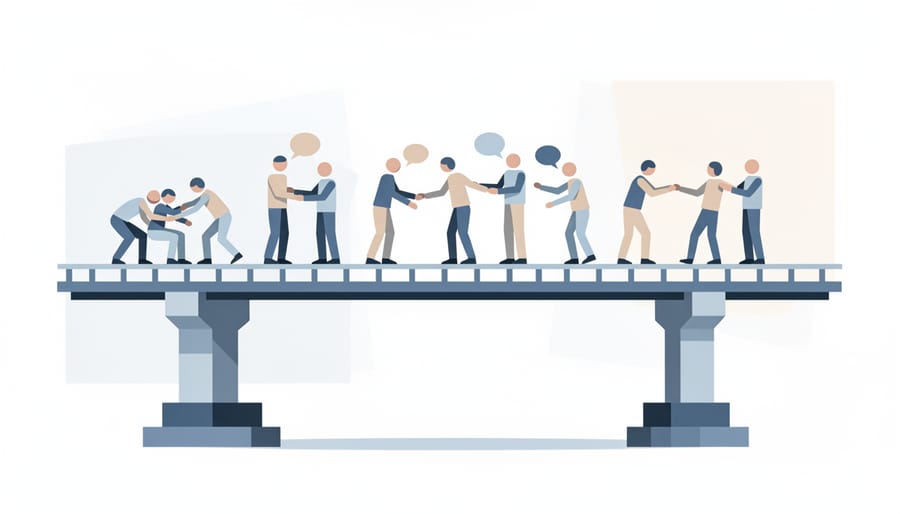
Psychological safety doesn’t emerge by accident. It’s built deliberately through specific conditions that work together to protect mental health and create space for people to show up as themselves.
- Trust between team members, the confidence that colleagues will respond with empathy rather than judgment
- Supportive leadership, managers who model vulnerability and respond constructively when problems surface
- Normalized vulnerability, a culture where admitting uncertainty or asking for help is expected, not penalized
- Open communication channels, accessible ways to raise concerns, give feedback, and share struggles
- Fair treatment of mistakes, viewing errors as learning opportunities instead of career threats
These elements reinforce one another. When a leader admits they don’t have all the answers, it signals to the team that uncertainty is acceptable. When mistakes are treated as data rather than failures, people feel safer taking risks and speaking honestly. When communication flows freely, team members learn they can support someone who’s struggling without fear of breaking unspoken rules.
Trust sits at the foundation. Without it, even well-designed communication channels go unused because people don’t believe it’s actually safe to speak. Supportive leadership amplifies that trust by demonstrating through action, not just policy, that vulnerability won’t be weaponized during performance reviews or quiet conversations.
Fair treatment of mistakes matters especially for mental health. When people fear that one error will define their reputation, anxiety spikes and burnout accelerates. The constant vigilance required to appear perfect is exhausting. Workplaces that respond to mistakes with curiosity rather than punishment create room for employees to acknowledge when they’re overwhelmed, confused, or need help, the very admissions that protect mental health before crisis hits.
These components don’t require massive budget investments. They require intention, consistency, and a willingness to shift how power and vulnerability operate in daily interactions.
How Organizations Measure Psychological Safety
Organizations can’t fix what they can’t see. That’s why many Canadian workplaces now use standardized assessment tools to measure psychological health and safety rather than relying on assumptions or informal check-ins.
The Guarding Minds at Work assessment is one widely used framework. Mental Health Research Canada deployed it in their 2023 survey of 5,505 working Canadians, generating data that revealed 23% of employed Canadians believe their workplace is not psychologically safe. The organization provides an interactive online dashboard where employers can explore these results and benchmark their own environments against national patterns.
These tools typically measure multiple dimensions: organizational culture, workload management, recognition and reward systems, civility and respect, and psychological demands. They reveal gaps that managers often miss. While 52% of managers believe they can identify when team members are struggling, standardized assessments frequently uncover problems that flew under the radar during casual observation.
The research team behind Workplace Strategies for Mental Health updated their statistics in 2024 with help from researchers under the supervision of Dr. Heather Stuart from Queen’s University. Their work provides employers with evidence-based benchmarks and demonstrates the financial case for measurement: organizations that support employees’ mental health see a return of $4 for every dollar they invest in employee mental health treatments.
Measurement isn’t a one-time exercise. Workplaces that take psychological safety seriously track changes over time, survey employees regularly, and use the data to guide concrete interventions. Without measurement, improving psychological safety remains wishful thinking. With it, organizations can identify where to focus resources and monitor whether their efforts actually make employees feel safer.
Personal Stories: When Psychological Safety Is Present, and When It’s Not
When Sarah started her new role at a Toronto tech company, she noticed something different in her first team meeting. A senior developer openly admitted he’d broken production code and needed help fixing it. Instead of blame, the team rallied to solve the problem together. Months later, when Sarah experienced panic attacks that made it hard to concentrate, she felt safe enough to tell her manager. They worked out a flexible schedule while she started therapy. That openness, she says, kept her from spiraling into burnout.
Contrast that with Marcus’s experience at a marketing firm. When a colleague disclosed depression during a particularly demanding campaign, the team lead responded with a tight smile and said, “We all have stress, just push through.” Marcus watched his colleague withdraw, stop contributing ideas, and eventually leave. After that, Marcus never mentioned his own anxiety, even when it worsened. He showed up, stayed quiet, and looked for another job.
These stories illustrate what the statistics only hint at. When 23% of employed Canadians believe their workplace isn’t psychologically safe, that’s not just a number. It represents real people making daily calculations about what they can safely reveal, who they can trust, and whether asking for help will cost them respect or opportunity.
Sharing these experiences matters because they make psychological safety tangible. It’s not an abstract HR concept but the difference between a manager who asks “How can we support you?” and one who implies vulnerability is weakness. Stories help others recognize their own situations and understand that safer workplaces are possible, not just aspirational.
Why This Matters Now: The Case for Psychological Safety
The case for psychological safety isn’t just ethical, it’s urgent and measurable. Canadian workplaces that invest in employee mental health see a return of $4 for every dollar spent on mental health treatments. That financial reality reflects something deeper: when people feel safe enough to speak honestly about their struggles and get help without risking their careers, they stay healthier, more engaged, and more productive.
Psychological safety reduces absenteeism by catching problems early, before burnout forces people out. It improves retention because employees don’t flee environments where they feel silenced or judged. When 23% of employed Canadians believe their workplace isn’t psychologically safe, that’s not just a wellness issue, it’s a staffing crisis waiting to happen.
Beyond the numbers, there’s a basic ethical question: do we accept workplaces that damage mental health as collateral? Psychological safety isn’t a perk or a program. It’s the foundation that allows every other mental health initiative to actually work. Without it, wellness apps and EAP benefits sit unused because people are too afraid to admit they need them.
Creating psychologically safe workplaces means building a culture where mental health isn’t something employees manage alone in silence, but something the entire organization protects together.
Common Questions About Workplace Psychological Safety
What is psychological safety at work?
Psychological safety at work is the shared belief that people can speak up, ask questions, admit mistakes, and raise concerns without fear of embarrassment, rejection, or punishment. It’s the foundation that allows employees to bring their full selves to work and ask for help when they need it.
How do organizations measure psychological health and safety?
Organizations use standardized assessment tools like Guarding Minds at Work, which was used in a 2023 survey of 5,505 working Canadians. Mental Health Research Canada provides an interactive online dashboard to help workplaces track and understand their results, identifying specific areas where psychological safety may be weak.
Why does psychological safety matter for mental health?
Psychological safety directly protects mental health by reducing workplace stress, preventing burnout, and creating an environment where employees feel comfortable seeking support. When people can speak openly about challenges, they’re less likely to suffer in silence or develop more serious mental health concerns.
What can employees do if their workplace isn’t psychologically safe?
You can start by documenting patterns of behaviour, speaking with HR or a trusted manager about your concerns, and connecting with colleagues who share similar experiences. If your workplace remains unsafe, prioritize your mental health by looking for resources to support yourself and learning where to find help outside of work.
Who is responsible for creating psychological safety?
Everyone plays a role, but leadership carries the primary responsibility. Leaders set the tone through their actions, responses to mistakes, and willingness to model vulnerability. That said, team members contribute by speaking up, supporting colleagues, and calling out behaviours that undermine safety.
These questions reflect what many Canadians wonder when they first encounter the concept of psychological safety. The gap between what managers believe (52% think they can identify struggling team members) and what employees experience (23% say their workplace isn’t psychologically safe) shows why these conversations matter. Psychological safety isn’t just an HR initiative. It’s a lived experience that shapes whether you feel anxious on Sunday night, whether you hide a panic attack in the bathroom, or whether you can admit you’re overwhelmed before you reach crisis. Understanding your rights and options helps you protect your mental health, even in imperfect workplaces.
Psychological safety isn’t just a workplace buzzword, it’s a foundation for protecting your mental health where you spend most of your waking hours. When you can speak up without fear, admit when you’re struggling, and trust that mistakes won’t destroy your career, you’re better equipped to manage stress, prevent burnout, and seek help when you need it.
If you’ve read this and recognized that your workplace doesn’t feel safe, you’re not alone. Nearly a quarter of employed Canadians share that experience. Naming what you’re feeling is the first step. Reflect on your own environment: Can you raise concerns? Do you hide your struggles? Does fear shape your workday?
Workplaces can change, but change starts with awareness and collective action. Share your story if you feel safe doing so, breaking the silence helps others recognize their own experiences and builds momentum for cultural shifts. mental health resources outside work when you need them.
You deserve a workplace where your mental health matters. Whether you’re advocating for yourself, supporting a teammate, or leading change in your organization, your voice and experience count. Together, we can build workplaces where everyone feels safe enough to be human.