judy
judy Recognize the warning signs immediately: chasing losses, hiding gambling activity, borrowing money to play, or feeling anxious when trying to stop. If you’re spending hours choosing to gamble with trx at Moonbet.co or other platforms while neglecting relationships and responsibilities, you may need support, and that’s okay. Help is available right now, without judgment.
The National Problem Gambling Helpline (1-800-MY-RESET) offers free, confidential call, text, and chat services 24/7/365. Operated by the National Council on Problem Gambling, the helpline serves as a one-stop hub connecting people looking for assistance with a gambling problem to local resources across all 50 states and U.S. territories. Counselors understand what you’re experiencing and can help you find support in your area.
You’re not alone in this struggle. The shame and isolation often feel overwhelming, but recovery is possible with the right support network.
This guide connects you with practical resources designed specifically for online gambling challenges, from free counseling services and self-assessment tools to peer support groups and family assistance programs. Whether you’re questioning if gambling has become a problem, seeking immediate intervention, or supporting someone you care about, these pathways offer hope and proven strategies for healing.
Taking the first step toward help demonstrates courage, not weakness. Recovery begins with acknowledging the struggle and reaching out, something you’re already doing by being here.
Recognizing When Online Gambling Becomes a Problem
The Emotional Signs You Shouldn’t Ignore
Your emotions can be powerful messengers that something needs attention. Many people who struggle with online gambling notice they feel anxious or restless when they’re not playing, or when they try to cut back. You might find yourself constantly thinking about your next bet, replaying past wins, or planning how to recover losses.
Guilt and shame often creep in after gambling sessions, especially when you’ve spent more than you intended or broken promises to yourself or loved ones. These feelings might lead you to hide your gambling from family and friends, which can create an isolating cycle.
Some people experience mood swings—feeling euphoric during wins but deeply depressed after losses. You might notice irritability when someone interrupts your gambling time, or when daily responsibilities get in the way of playing.
It’s also common to use gambling as an escape from stress, sadness, or other uncomfortable emotions. If you’re gambling to avoid dealing with problems rather than for entertainment, this pattern deserves your attention.
Recognizing these emotional signs isn’t about judging yourself—it’s about understanding when you need support. These feelings are valid signals that it’s time to reach out for help, and there are compassionate resources available specifically for Canadians experiencing these challenges.
- Anxiety or restlessness when not gambling or trying to cut back
- Constant preoccupation with betting, past wins, or recovering losses
- Guilt, shame, and secrecy about gambling habits
- Mood swings tied to gambling outcomes
- Using gambling to escape stress or uncomfortable emotions
When Your Relationships Start to Suffer
One of the clearest signs that gambling has become a problem is when it starts affecting your connections with the people who matter most. You might find yourself cancelling plans with friends to gamble online, or making excuses to avoid family gatherings because you’re preoccupied with your next bet. Many people describe feeling like they’re living a double life, keeping their gambling habits secret from loved ones out of shame or fear of judgment.
Maria from Toronto shared that she stopped answering her sister’s calls and began lying about how she spent her evenings. “I didn’t realize how isolated I’d become until my best friend told me she felt like she’d lost me,” she explained. This kind of social withdrawal often happens gradually, making it hard to notice until the distance has already grown.
If family members or friends have expressed concern about your gambling or the time you spend online, these concerns deserve attention. When partners complain about financial secrecy, or when children notice your distraction, these are meaningful signals. Relationships thrive on trust and presence, and gambling can quietly erode both. Recognizing this pattern is not about assigning blame but about acknowledging that reaching out for support can help you reconnect with the people and life you value.
Immediate Support: Where to Turn Right Now

24/7 Helplines and Crisis Support
When gambling feels overwhelming, you don’t have to face it alone. Help is available right now, any time of day or night.
In the United States, the National Problem Gambling Helpline (1-800-MY-RESET) provides free, confidential support 24/7/365 across all 50 states and U.S. territories. Operated by the National Council on Problem Gambling, the helpline connects you to local resources through call, text, or chat. Counsellors understand what you’re going through and can guide you toward where to find help in your community, including treatment options, support groups, and financial counselling services.
In Canada, the national helpline ConnexOntario offers free, confidential support at 1-866-531-2600. Available 24/7, counsellors can connect you with treatment options, support groups, and financial counselling throughout your province.
If you’re in crisis and need immediate mental health support, the Canada Suicide Prevention Service is available at 1-833-456-4566 or through their text service by messaging 45645. Crisis workers provide compassionate, judgment-free support during your most difficult moments.
For Quebec residents, Gambling: Help and Referral offers bilingual support at 1-800-461-0140. In other provinces, contact your local ConnexOntario office for region-specific resources.
Not ready to talk yet? That’s okay. The National Problem Gambling Helpline chat is free, confidential, and available 24/7. Most provincial gambling help websites in Canada also offer text-based options that provide the same confidential guidance in a format that might feel more comfortable.
Remember, reaching out is a sign of strength, not weakness. The person who answers your call has helped countless others navigate similar struggles. They won’t judge you, they’ll listen, understand, and help you take that first step toward healing. Whether you call today or tomorrow, support will be there waiting.
Online Chat and Text Support Services
If picking up the phone feels overwhelming, you’re not alone. Many people find it easier to reach out through text or online chat, where you can take your time and feel less pressure. Both U.S. and Canadian services offer digital-first support designed specifically for gambling concerns.
The National Problem Gambling Helpline (1-800-MY-RESET), operated by the National Council on Problem Gambling, provides free, confidential chat and text services available 24/7 in all 50 states. You can reach out by texting 1-800-MY-RESET or accessing the chat service online, connecting you with trained specialists who understand gambling challenges and won’t judge your experiences.
| Support Channel | Contact Method | Availability | Coverage |
|---|---|---|---|
| Phone | 1-800-MY-RESET | 24/7 | U.S. (all 50 states) |
| Text | Text 1-800-MY-RESET | 24/7 | U.S. (all 50 states) |
| Chat | Online chat service | 24/7 | U.S. (all 50 states) |
| Text (Canada) | ConnexOntario | Varies | Ontario |
| Chat (Canada) | Crisis Services Canada | 24/7 | Canada |
In Canada, ConnexOntario provides confidential text support where you can describe your situation and receive guidance about local resources. Simply text your questions and receive personalized responses at your own pace.
Crisis Services Canada offers online chat support available around the clock, connecting you with counsellors who can provide immediate emotional support during difficult moments. Whether you’re feeling anxious about debt, struggling with urges to gamble, or need someone to listen, trained volunteers are ready to help.
Many provincial health services now include secure messaging options where you can communicate directly with addiction counsellors. These platforms let you share your story, ask questions, and receive professional guidance without the anxiety of real-time conversation. You can write when it feels right for you, whether that’s late at night or during a quiet moment during your day. Reaching out digitally is just as valid and courageous as any other form of help-seeking.
Professional Mental Health Resources for Gambling Concerns
Finding a Counselor Who Understands Gambling Addiction
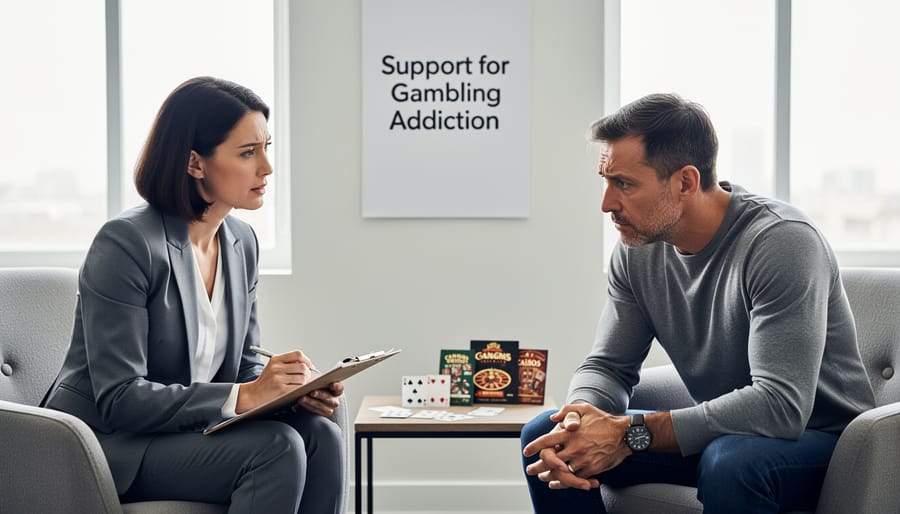
Finding the right support starts with getting professional help from someone who truly understands gambling addiction. You deserve a counselor who recognizes that this isn’t about willpower—it’s a treatable condition.
Start by contacting your provincial problem gambling helpline, which can connect you with specialized therapists in your area. Many counselors now offer virtual sessions, making support accessible no matter where you live in Canada. When searching, look for professionals trained in gambling-specific treatments who won’t judge your struggles.
During your first session, expect to share your story in a safe space. Your counselor will work with you to understand what triggers your gambling and how it affects your daily life. Together, you’ll create a personalized plan that fits your needs.
One effective approach is Cognitive Behavioral Therapy, or CBT. Think of it as retraining your brain’s responses. Your therapist will help you identify thoughts like “I’m due for a win” and replace them with realistic thinking. You’ll also learn practical skills to manage urges and rebuild your life beyond gambling.
Other approaches might include mindfulness techniques to handle cravings or family therapy to heal relationships. Remember, treatment isn’t one-size-fits-all. If the first counselor doesn’t feel right, it’s okay to try someone else. Finding the right fit is part of your healing journey, and many people find relief within weeks of starting treatment.
Treatment Programs and Support Groups
Recovery is possible, and you don’t have to walk this path alone. Across Canada, compassionate treatment programs and support groups stand ready to help you rebuild your relationship with gambling and restore balance to your life.
Gamblers Anonymous offers free, peer-led meetings throughout Canadian communities and online. These gatherings provide a safe space where people share their experiences without judgment. Many participants describe their first meeting as a turning point, finally connecting with others who truly understand the struggle. The twelve-step program has helped countless Canadians find hope and develop practical strategies for staying on track.
Community health centres in most provinces provide structured counseling programs specifically designed for gambling concerns. These evidence-based treatments typically include cognitive behavioral therapy and motivational counseling, helping you identify triggers and develop healthier coping mechanisms. Many programs offer flexible scheduling, including evening and weekend appointments, making support accessible around work and family commitments.
Provincial problem gambling services also connect you with specialized treatment options, from outpatient counseling to intensive day programs. Some services are available at no cost, while others work on a sliding fee scale based on your situation.
If you need immediate support, the National Problem Gambling Helpline operates 24/7/365 through the National Council on Problem Gambling. You can reach the helpline by calling or texting 1-800-MY-RESET, or through their free, confidential online chat. The service connects people seeking help with local resources across all 50 states and U.S. territories.
For those who prefer privacy or live in remote areas, virtual support groups and online counseling have expanded significantly. These digital options bring professional guidance and peer support directly to your home, removing transportation barriers and scheduling challenges.
Remember, seeking help demonstrates courage, not weakness. Every person’s recovery journey looks different, and finding the right support may take time. What matters most is taking that first step forward.
Self-Help Tools and Harm Reduction Strategies
Taking Control with Self-Exclusion and Limits
Taking control starts with creating barriers between you and gambling opportunities. Self-exclusion programs allow you to voluntarily ban yourself from online gambling sites for periods ranging from months to years, or even permanently. Most licensed Canadian gambling operators offer these programs through their websites, making the process straightforward. Once enrolled, you won’t be able to access your account or create new ones with participating sites.
Setting financial limits provides another layer of protection. Consider asking your bank to block transactions to gambling sites or requesting a trusted family member to help manage your finances temporarily. Many banking institutions in Canada now offer transaction blocking specifically for gambling-related purchases. You can also use third-party software that blocks access to gambling websites on your devices.
These tools aren’t about punishment—they’re about giving yourself space to heal. Sarah, who struggled with online poker, found that combining self-exclusion with a spending limit gave her the breathing room she needed to focus on recovery. “It removed the constant temptation,” she shares. “I could finally think clearly about what I wanted my life to look like.”
Remember, using these tools shows strength and self-awareness, not weakness. They’re practical steps that create the foundation for lasting change.
- Enroll in self-exclusion programs through each gambling site you’ve used and any provincial or national registries available in your region.
- Contact your bank to set up transaction blocks that prevent payments to gambling sites and online casinos.
- Install website-blocking software on all your devices (computer, phone, tablet) to prevent access to gambling platforms.
- Set strict deposit and time limits on any remaining accounts before full exclusion takes effect, creating immediate friction if you’re tempted to gamble.
Apps and Digital Tools That Support Recovery
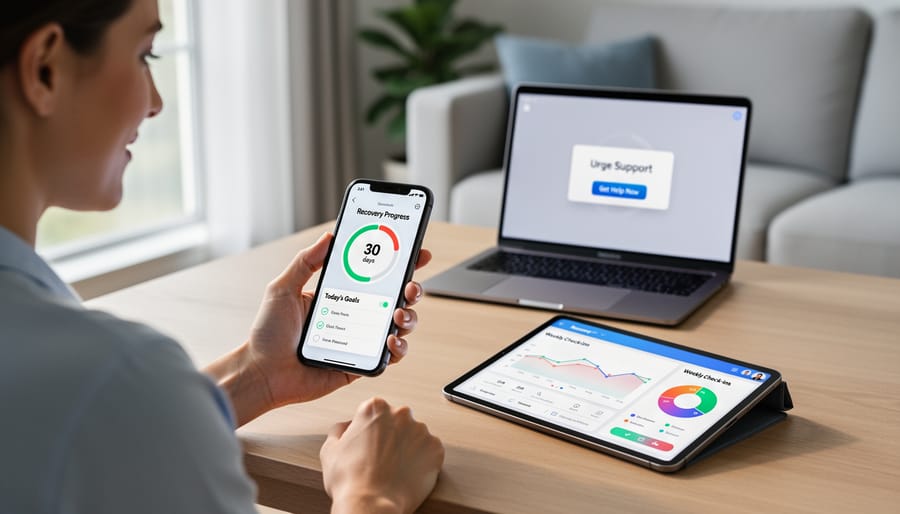
Digital tools can provide powerful support when you’re working toward recovery. Apps like Bet Blocker and Gamban help by restricting access to gambling sites across all your devices, creating a protective barrier during vulnerable moments. These blocking tools are free or low-cost and work quietly in the background.
For tracking your progress, consider apps like I Am Sober or similar habit-tracking tools where you can mark each day without gambling, celebrate milestones, and connect with supportive communities. Many Canadians find that seeing their streak grow becomes a meaningful source of motivation.
When urges strike, grounding apps like Calm or Headspace offer quick mindfulness exercises that can help you pause and redirect your thoughts. Some people create a personal “urge surfing” playlist or keep a list of alternative activities on their phone—simple strategies that work when you need them most.
Remember, technology is just one part of your support system. These tools work best alongside human connection, whether that’s counseling, peer support groups, or trusted friends who understand your journey. There’s no shame in using every resource available to support your recovery.
Supporting Someone You Care About
When someone you love is struggling with online gambling, knowing how to help can feel overwhelming. Your concern shows courage, and supporting someone you care about through this challenge can make a meaningful difference in their recovery journey.
Start by choosing the right moment for conversation. Find a private, calm setting when they’re not actively gambling or experiencing heightened emotions. Open the discussion with care rather than criticism. Instead of saying “You have a problem,” try “I’ve noticed you seem stressed lately, and I’m worried about you.” This approach invites dialogue rather than defensiveness.
Listen without interrupting or judging. People dealing with gambling challenges often carry tremendous shame, making it difficult to be honest. Your role isn’t to fix everything immediately—it’s to create a safe space where they feel heard and valued. Acknowledge their feelings: “That sounds really difficult” can be more powerful than offering solutions right away.
Avoid enabling behaviors while maintaining compassion. This means not lending money to cover gambling debts or making excuses for their behavior. Setting healthy boundaries protects both of you. You might say, “I love you and want to help, but I can’t provide money anymore. I will support you in finding professional help.”
Educate yourself about gambling challenges. Understanding that this is a mental health concern, not a moral failing, helps you respond with empathy rather than frustration. Remember that recovery isn’t linear—setbacks happen, and continued support matters.
Take care of your own wellbeing too. Supporting someone through recovery can be emotionally draining. Consider joining support groups for family members or speaking with a counselor yourself. You can’t pour from an empty cup, and maintaining your own mental health ensures you can offer sustained, genuine support.
Real Stories of Recovery and Hope
Recovery from online gambling challenges is possible, and thousands of Canadians have found their way back to healthier, more balanced lives. These stories remind us that reaching out for help is a sign of strength, not weakness.
Michael from Vancouver discovered online sports betting during the pandemic lockdowns. What started as entertainment quickly spiraled into spending hours each day placing bets and hiding losses from his partner. “I felt completely trapped,” he shares. “The shame was overwhelming, and I thought I was the only person going through this.” After his partner discovered the extent of his gambling, Michael contacted a local addiction counselor specializing in gambling issues. Through individual therapy and peer support groups, he learned healthy coping strategies for stress and rebuilt trust in his relationships. “The hardest part was making that first call,” Michael reflects. “But once I did, I found a whole community of people who understood exactly what I was going through. I’m two years into recovery now, and life feels manageable again.”
Priya from Toronto found herself gambling on online casino games during work breaks and late into the night. The turning point came when she missed her daughter’s school play because she lost track of time while gambling. “That moment broke my heart,” she says. Priya reached out to a gambling helpline and connected with a counselor who helped her understand the emotional triggers behind her gambling. She also joined an online support group where she met others facing similar challenges. “Recovery isn’t a straight line,” Priya explains. “There are good days and difficult days, but having people who believe in you makes all the difference. I’ve learned to celebrate small victories and be gentle with myself.”
These stories demonstrate that recovery thrives on connection, professional support, and the courage to take that first step toward help.
If you’re reading this, you’ve already taken an important step. Recognizing that gambling is affecting your mental health takes courage, and seeking information about support shows incredible strength. Recovery from gambling-related challenges is not only possible—it happens every day across Canada.
You are not defined by your struggles with gambling. Countless people have walked this path before you and found their way to healthier, more fulfilling lives. Whether you’re just beginning to question your relationship with online gambling or you’ve been struggling for years, the right support can make all the difference. Recovery looks different for everyone, and there’s no single “correct” way to heal.
The resources outlined in this article—from crisis hotlines and counseling services to peer support groups and self-help tools—are here for you whenever you’re ready. Even small steps matter. Calling a helpline, joining an online support group, or simply talking to someone you trust can be the beginning of meaningful change.
If you’re supporting someone else through this journey, your compassion matters more than you know. Continue offering understanding without judgment, and remember that you also deserve support.
We invite you to take that first step today, whatever it looks like for you. And if you’ve found your way through gambling challenges, consider sharing your story—your experience could light the path for someone else searching for hope.