judy
Most lyophilized peptides stay stable for months to a few years when kept sealed, cold, dry, and dark. If you work with research materials, a reliable source such as Kylo Peptides Canada can supply the product, but your storage routine is what keeps it usable. The standard rule is simple: store the unopened vial in a freezer at around -20°C, keep it away from light and moisture, and let it reach room temperature before you open it. Done right, this takes about five minutes of setup and no special skill, just a little care and consistency.
The reason it works is that freeze-drying removes the water that makes peptides break down. Heat, humidity, and repeated temperature swings put that protection at risk, which is why a few small habits matter so much.
A quick note on framing: these materials are for laboratory research, not personal use. Taking care of the work is one part of taking care of yourself, and if you’re feeling stretched thin, it’s okay to pause and support yourself first. Below, you’ll find the exact steps, a storage table, and answers to common questions.
Why Freeze-Dried Peptides Last Longer, and What Still Threatens Them
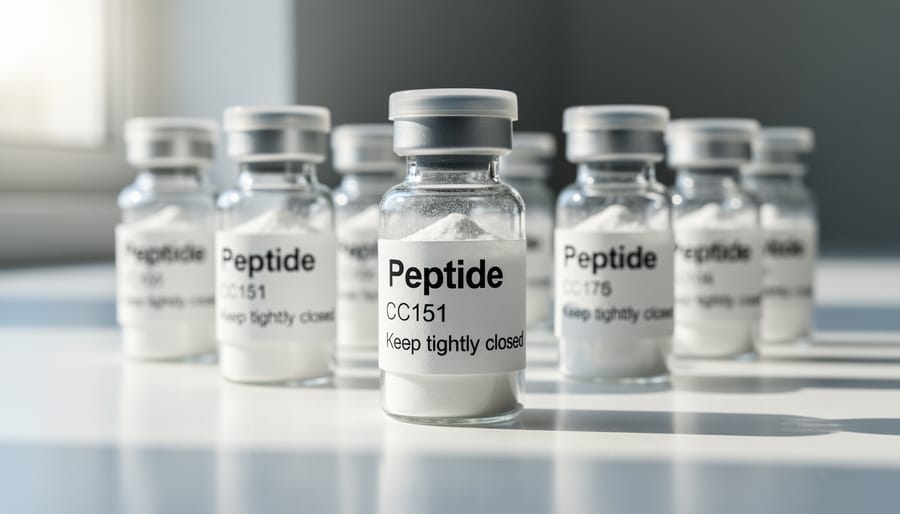
“Lyophilized” is just a technical word for freeze-dried. The peptide is frozen, then the water is gently removed, leaving a light, dry powder or small cake at the bottom of the vial. That missing water is the whole secret. Most of the chemical changes that slowly break peptides down need water to happen, so a dry powder stays steady far longer than the same peptide dissolved in liquid.
Dry doesn’t mean invincible, though. A few everyday things can still undo that protection:
– Moisture: Even a little humidity getting into a vial can start the breakdown the drying process was meant to prevent. This is the easiest threat to overlook.
– Warmth: Heat speeds up almost every slow chemical change, so a warm shelf wears on a peptide faster than a cold one.
– Light: Some peptides are sensitive to light, which is why a dark spot is a good default.
– Air: Oxygen can affect certain peptides over time, so a tight seal matters.
– Repeated temperature changes: Moving a vial in and out of the cold again and again invites condensation, which brings moisture right back in.
It helps to treat shelf life as a range rather than a single fixed date. Some peptides stay stable for a long time, while others are more delicate and need extra care. Your supplier’s guidance for each specific material is always the best reference.
None of this needs to feel overwhelming. Once you know what the threats are, a simple routine covers most of them.
What You Need on Hand Before You Start Storing
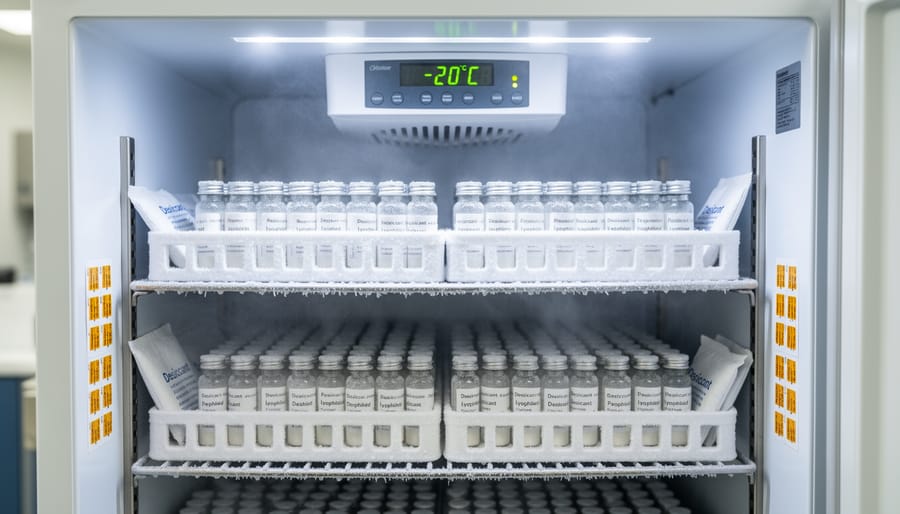
You don’t need a fancy lab to store freeze-dried peptides well. A handful of simple, affordable items will cover almost every situation, and most researchers already have a few of them. Think of this as a starter kit you can build slowly.
- A freezer with stable temperatures, ideally a non-frost-free unit, since automatic defrost cycles cause small warm-ups that stress your materials.
- A thermometer, so you can confirm your freezer or refrigerator is staying where you expect it to.
- Desiccant packs, which soak up stray moisture, the biggest enemy of dried peptides.
- Airtight containers, to keep humidity and odors out and add a second layer of protection around each vial.
- Labels and a permanent marker, so every vial carries its name, date received, and any handling notes.
- A simple storage log, whether a notebook or spreadsheet, to track dates, locations, and each time a vial is opened.
- Clean gloves, which protect the material from oils and contamination and keep your hands safe.
If your budget or space is tight, start with the freezer, desiccant, airtight containers, and labels, then add the rest as you go. The goal isn’t perfection. It’s a steady, repeatable setup that makes good habits feel easy rather than overwhelming.
Safety Warnings and Stop Signs to Watch For
Handling peptides safely is mostly about small, steady habits, and those habits protect both your materials and the people around you. Wash your hands, put on clean gloves before touching any vial, and keep tools and surfaces tidy so nothing sneaks in to contaminate your stock. Store everything well away from food and drink, and keep it out of reach of anyone who shouldn’t be handling it. If your space already has lab safety signs they’re a helpful reminder of these basics, and your own safety policy guidance can fill in the details specific to your workplace.
It also helps to know exactly when to stop. Set a vial aside, or discard it, if you notice any of these:
– A damaged or loose seal
– Visible moisture inside the vial
– Clumping or a sticky, collapsed look
– Discoloration
– A label that is missing, smudged, or unclear
One gentle reminder: stored research materials are for laboratory work only, never for personal use or self-treatment. If you have a question about your own health, please bring it to a qualified healthcare professional. Being cautious here isn’t a sign of overreacting. It’s simply good care.
Step-by-Step Routine for Storing Lyophilized Peptides
On Arrival: Inspect, Label, and Choose Your Storage Spot
When a shipment arrives, take a few calm minutes before anything goes into storage. This small pause protects your material for months to come.
Start by checking each vial for cracked caps, loose seals, or any sign of moisture inside. Then decide where it will live. If you plan to use it within a few weeks, the refrigerator is usually fine. For anything you’ll keep longer, the freezer is the safer home. Whatever you choose, your supplier’s instructions come first and override any general rule.
1. Inspect each vial and its packaging for damage, moisture, or an unclear label.
2. Let the sealed vial reach room temperature before opening, so condensation doesn’t form on the powder.
3. Label it with the date received and, later, the date opened.
4. Place the vial in an airtight container with a desiccant.
5. Store it at the recommended temperature, in the refrigerator or freezer.
6. Keep it dark, away from light.
7. Log each time you access it.
Even a simple notebook entry counts. Future you will be grateful for it.
Opening and Resealing Without Letting Moisture In

Cold vials collect moisture the moment they meet room air. If you open one straight from the freezer, water condenses on the powder, and that dampness is one of the biggest reasons freeze-dried peptides break down early. So let the sealed vial sit on the bench until it reaches room temperature. Thirty minutes to an hour is typical, longer for larger vials.
Once it’s warm, get everything ready first: gloves on, labels and tools within reach, a clean surface. The goal is to keep the vial open for as short a time as possible. Take what you need, then close it right away.
Reseal firmly and check that the cap or stopper sits snugly. If you use a desiccant container, return the vial there, then put it straight back into cold storage. Don’t leave it out “for a minute.”
If you’ll be using the material over weeks or months, consider dividing it into small portions when you first open it. Each portion stays sealed until its turn, so the main supply isn’t exposed again and again.
Long-Term Keeping and Everyday Habits
Once your vials are stored, the goal is steadiness. Peptides cope far better with a constant cold than with a temperature that keeps wandering up and down. Put them toward the back of a stable-temperature freezer, away from the door, where every opening lets in a rush of warmer air. If your freezer runs frost-free cycles, those small warming spikes can quietly stress the material, so a manual-defrost unit is the gentler choice.
A simple log helps more than you’d expect. Write down the date received, the date opened, where the vial lives, and a quick note each time you check it. Even a basic notebook or shared spreadsheet keeps things from slipping through the cracks.
As a general sense of timeframes, cold storage tends to extend shelf life considerably compared with room temperature, often by months or even years. These are rough ranges, not promises, and your supplier’s data sheet remains the best guide for each peptide.
Typical Shelf Life at a Glance: Room Temperature, Fridge, and Freezer
Storage temperature is the biggest lever you have, so it helps to see how the three common options compare. Think of the ranges below as rough guideposts rather than promises. Some peptides are sturdier, while others are more delicate, especially those prone to oxidizing or absorbing water.
| Storage condition | General expectation | Best used for |
|—|—|—|
| Room temperature (cool, dark, dry) | Days to a few weeks for most peptides, sometimes longer | Brief handling or shipping windows |
| Refrigerator (about 2 to 8 °C) | Several weeks to a few months | Material you plan to use soon |
| Freezer (about -20 °C or colder) | Often a year or more, and frequently several years | Long-term keeping |
A few things shape where a given peptide lands in these ranges. Certain amino acids, such as methionine, cysteine and tryptophan, make a peptide more sensitive to air and light. Peptides that attract moisture easily tend to need tighter sealing and a desiccant. A vial that has been opened many times will usually age faster than one that has stayed sealed.
Please treat the supplier’s data sheet as your best reference. It reflects what was actually tested for that specific material, and it takes priority over any general table, including this one. If the sheet is missing or unclear, a quick message to the supplier is a kind favor to your future self.
How to Check Your Peptides Are Still in Good Shape, and What to Do Next
A quick look every few months catches most problems before they cost you anything. Start with the vial itself. A healthy lyophilized peptide usually looks like a loose, dry, fluffy powder or a small cake. Clumping, a collapsed or sticky-looking cake, droplets inside the vial, or a color that has changed since you first logged it are all signs to pause. Then check the paperwork: make sure each label is readable, the date matches your storage log, and the temperature record shows no long gaps or surprise swings.
If something seems off, set that vial aside, label it clearly, and don’t use it. Contact your supplier, who can tell you whether the change is normal for that peptide, and loop in your lab’s safety lead if the material is damaged or the label is unclear. Make a habit of putting a recurring quarterly reminder on your calendar so the check never slips. And if a teammate seems overwhelmed by the upkeep, you can support a colleague by sharing your routine and checking storage together.
Can I refreeze a vial?
Moving a sealed vial between cold storage spots is usually fine, but repeated temperature swings add stress. Dividing material into small portions early on helps you avoid this.
What does clumping mean?
Clumping often points to moisture getting in. Set the vial aside and check with your supplier before deciding what to do.
Is it okay to store peptides in a frost-free freezer?
It’s best avoided, because frost-free cycles warm and cool the space repeatedly. A steady-temperature freezer is a gentler choice.
Does a vial that has been opened age faster?
It can, since each opening lets in air and moisture. Warm the vial before opening, keep it open briefly, and reseal promptly.
Sharing what works with your team means everyone benefits from the same steady habits.
Looking after freeze-dried peptides doesn’t take a perfect lab or a long checklist. It takes a few steady habits, repeated until they feel automatic. Keep them cold, dry, dark and sealed, and you’ve already covered most of what causes materials to fail early. Label what arrives, log what you open, and let vials warm up before you break the seal.
You don’t have to figure it all out alone, either. Talk through your routine with your team, borrow what’s working in other labs, and keep your supplier’s guidance close, since it always takes priority over general rules. When the small details are handled, you free up your energy for the research that matters most, and that’s a good place to be.